A student's question
“If shamanism already teaches us to journey into non-ordinary reality, encounter spirits and work in the Middle World, why would we need another training pathway to communicate with those who have died?”
It is an excellent question, and it deserves a careful answer, especially from us. Soul Consciousness Lab® teaches a full, progressive shamanism pathway. It also established The School of Mediumship to teach evidential mediumship. We teach both because we take both seriously.
The two traditions share real ground: altered states of awareness, relationships with non-physical beings, and, in both, experiences involving people who have died. That overlap is genuine, and it would be inaccurate to deny it. But sharing a spiritual subject does not mean two disciplines teach the same method, pursue the same purpose, or develop the same competencies.
The distinction is not that one discipline can reach the spirit world and the other cannot. It is about what the practitioner is trying to do, how the communication is developed, how the information is evaluated, and what responsibilities arise when another person is sitting in front of you. Neither pathway is more advanced, more authentic or more spiritual. Each deserves to be taught on its own terms, and the research on how people learn explains why.
1. What Is the Fundamental Difference?
Shamanism is a broad term for diverse spiritual traditions involving relationships with spirits, ancestors and nature, healing, divination, ceremony and service to a community. Those traditions are not one thing: a Siberian ritual specialist, a Himalayan healer and an Amazonian ceremonial practitioner may have very different cosmologies, methods and sources of authority, as Soul Consciousness Lab®'s History of Shamanism traces. Core shamanism, developed for contemporary practice, draws together selected journeying methods: exploring non-ordinary reality, working with helping spirits and power animals, and journeying for guidance or healing.
Evidential mediumship, within the Spiritualist tradition, has a narrower focus: communication attributed to someone who has died. The medium attempts to describe an identifiable spirit communicator through their personality, relationships, memories and life, and the sitter judges what they recognise. The Spiritualists' National Union describes the purpose of mediumship as offering evidence of survival, not predicting the future, giving advice or counselling1.
Shamanic practice may ask
What guidance, healing, assistance or understanding is being sought through this spiritual work?
Evidential mediumship asks
Who is understood to be communicating, and what allows the sitter to recognise that particular person?
Both questions may concern spirits. They call for different practice, and different ways of judging whether the work has been done well.
2. Can Shamanic Practitioners Communicate with the Dead?
Yes, and it would be historically inaccurate to say otherwise. Anthropological literature records practitioners who relate to ancestors, journey to the dead, assist souls in transition and perform ceremonies connected with bereavement. In contemporary core shamanism, the Foundation for Shamanic Studies teaches specialised psychopomp work, describing the shaman as “a conductor of souls” who learns to “locate souls of the deceased that want assistance” and guide them onward2. Soul Consciousness Lab®'s own guide, What Is Shamanism?, lists helping the dead and guidance through death and transition among a practitioner's roles3. And SCL's shamanism pathway itself teaches psychopomp work and rituals for the departed at Level 2, and spirit communication clarity at Level 35.
So the issue is not whether shamanic work can involve the dead. It is this:
Working with a person who has died, within shamanic practice, is not the same task as establishing that person's identity for a living sitter in an evidential sitting.
A psychopomp ceremony aims to assist transition. An ancestral journey may seek guidance, understanding or ceremonial completion. An evidential sitting aims to develop recognisable information about one particular person, for someone who knew them. The presence of the dead in a practice does not make every form of work with them interchangeable.
3. Why Entering the Middle World Does Not Automatically Establish Mediumship
This is the heart of the student's question. In core shamanism, the Lower, Middle and Upper Worlds form an influential map of non-ordinary reality: the Lower World often associated with power animals and nature-based knowledge, the Upper World with spiritual teachers, and the Middle World with the non-ordinary dimension of ordinary reality, including places, nature spirits, ancestors and, in some teachings, the spirits of people who have died. These are spiritual categories within a teaching tradition, not universal cosmology shared by every Indigenous culture.
Suppose a student has learned to journey to the Middle World. They have real skills: preparation, intention, navigation, return and integration. Within the tradition, they may describe meeting a spirit. But the questions that define evidential mediumship remain unanswered:
- Can they tell an image they generated from information they attribute to a particular person who has died?
- Can they describe that person through specific, connected details, without immediately interpreting everything they perceive?
- Can they pass those details to a sitter without asking questions that supply the information?
- Can they accept it calmly when the sitter does not recognise something?
- Can they sustain a private sitting while respecting the sitter's grief, privacy and right to stop?
A journey to the Middle World does not, by itself, teach or test these skills. The training may be valuable and demanding. It is training towards a different task.
Being able to navigate a spiritual framework is not the same as being trained to establish an identifiable communicator through evidence.
4. Shamanic Journeying and Mediumistic Blending Are Different Practices
Both traditions may involve shifts in ordinary attention, which makes them look more alike than they are. Soul Consciousness Lab®'s guide What Is Shamanism? distinguishes three broad ways people describe contact with spirits3:
Journeying
The practitioner travels into, or observes, non-ordinary reality, usually with a defined intention, often supported by drumming or rattling, then returns, records and integrates.
Possession
A being is understood to act through the practitioner, as in many ritual traditions worldwide.
Mediumship
Information is perceived and communicated: the medium attunes, or “blends”, with a communicator and describes what arises for the sitter.
Anthropologists drew a similar line long ago. Mircea Eliade distinguished the shaman, who controls spirits and journeys out to them without “becoming their instrument”, and who remembers the journey because information must be brought back, from the possessed medium4. Later scholars, including the anthropologist Jack Hunter, argue the boundary is blurred, and that Spiritualist mediumship development even resembles shamanic apprenticeship4. Both views are useful: the categories overlap, and they are not identical.
In mental mediumship, the medium is not usually travelling through a spiritual landscape. The task is to stay attentive to a developing communication while describing information that may identify a person. Some practitioners combine methods, and these categories do not describe every individual in every culture. But a standard journeying exercise and an evidential sitting are not the same educational exercise. They need different instructions, different feedback and different expectations.
5. Evidential Mediumship Requires a Different Standard of Information
This is where the need for specialised training becomes clearest. Both examples below are fictional, written only to illustrate the difference.
A shamanic journey for a grieving client
An evidential mediumship exercise
Neither example shows that one practice works and the other does not. They show the difference between meaningful spiritual information and information intended to establish the identity of a communicator. Shamanic divination can also produce specific, checkable claims; it is not always symbolic. The difference is that identifying a person for a sitter is not the stated learning outcome, or the assessment standard, of general shamanic journeying.
6. A Side-by-Side Comparison
This compares contemporary core-shamanic journeying and healing with evidential mediumship as taught in the Spiritualist tradition. It does not represent every Indigenous tradition or every form of mediumship.
| Area | Shamanic practice | Evidential mediumship |
|---|---|---|
| Primary purpose | Guidance, ceremony, divination, spiritual healing or assistance | Communication attributed to an identifiable person who has died |
| Common method | Journeying, helping spirits, ritual and ceremony | Attunement, blending, describing impressions, developing the communication |
| Who may be encountered | Power animals, teachers, ancestors, nature spirits or the dead, by tradition | A spirit communicator understood to be someone who has died |
| Practitioner's task | Undertake the journey or ceremony, interpret within the tradition, integrate | Develop a coherent account of the communicator for the sitter |
| How information is judged | Against the journey's purpose, tradition and the client's response | Specificity, connection, sitter recognition, honest handling of errors |
| Role of the other person | Consent, participation and integration | Independent recognition, or non-recognition, of the details |
| Specialist risks | Altered-state difficulties, ritual boundaries, cultural authority, client safety | Leading the sitter, false identification, dependency, grief, confidentiality |
| Training establishes | The shamanic methods taught and assessed | The mediumship methods taught and assessed |
| Does not automatically establish | Competence in evidential private sittings | Competence in shamanic healing, psychopomp, soul retrieval or ceremony |
Neither pathway is superior. Each requires preparation appropriate to the work it undertakes.
7. Psychopomp Work Is Not the Same as an Evidential Sitting
Psychopomp work is the strongest apparent overlap, so it deserves special attention, and it actually makes the case for specialised training most clearly. In core shamanism, the psychopomp journeys to help the soul of someone who has died move on. The Foundation for Shamanic Studies treats this as specialised work with explicit prerequisites: earlier courses, the ability to “successfully journey in the Upper, Lower, and Middle Worlds”, and a strong relationship with a power animal or teacher2. Soul Consciousness Lab®'s own shamanism pathway follows the same principle: extraction, soul retrieval and psychopomp work are not part of the foundation, because “the deeper methods belong to Level 2 and beyond”. Level 1 is about “stability, safety, and connection”; only at Level 2 does the student begin “to work with responsibility”5.
Even within shamanism, journeying competence is not treated as sufficient preparation for every advanced practice. Psychopomp work is taught separately because its purpose and responsibilities need additional instruction. The same principle applies, for the same reasons, when moving from shamanism to evidential mediumship.

A psychopomp practitioner may work with impressions concerning the dead, but the intended outcome is to assist transition, not to describe the person's identity in detail to a living sitter. The method does not include developing evidential information, avoiding leading questions, assessing recognition, or conducting a full private sitting. Psychopomp competence is therefore not an evidential mediumship qualification. And the reverse is equally true: an evidential medium, simply because they work with spirit communicators, is not trained to do psychopomp work.
8. What Research and Established Institutions Show
The case for separate training does not rest on our preference as a school that offers two programmes. It rests on four kinds of evidence.
Skills transfer poorly between loosely related tasks. Learning research distinguishes near transfer, between closely related tasks, which is common, from far transfer, between loosely related ones. A widely cited review of meta-analyses concluded that “far transfer of learning rarely occurs”, consistent with the century-old principle that transfer depends on how many elements two tasks actually share6. Shamanic journeying and evidential sittings share some elements, such as intention, focused attention and altered awareness, but not the defining ones: identifying a communicator, managing sitter feedback, and handling recognition and error.
Anthropology shows overlap, not equivalence. A 2021 review in the Annual Review of Anthropology emphasises how varied and shifting the category of “shamanism” is7. A classic cross-cultural survey of 488 societies found that about 90% had institutionalised altered states, and many linked them to spirit possession4. In India, too, ritual traditions such as Bhuta Kola in coastal Karnataka, where a performer is understood to embody a deity, fit neither Western category neatly8. The honest conclusion is that boundaries are blurred, and that it is exactly why each practice must be defined by its own aims and methods.
The states have been studied separately. A brain-imaging study of 15 experienced shamanic practitioners found a distinctive pattern during drumming-induced trance, with inwardly directed brain networks strengthened and the sound of the drum filtered out9. A small EEG study of six mediums found differences between their reported communication with the dead and ordinary remembering or imagining10. A 2024 review of 27 studies concluded that shamanic trances are not pathological and differ from ordinary consciousness11. These studies are small and tentative, and none establishes spirit contact; but none suggests the journeying state and the mediumistic state are interchangeable.
Institutions in both fields require separate preparation. The Foundation for Shamanic Studies sets prerequisites for psychopomp work2. Arthur Findlay College sets separate entry expectations for evidential and trance mediumship, even within mediumship12. And a 2026 study of mediumship certifications found that none of the six programmes it examined required grief training or formal ethics training as part of certification, a reminder of how much specific preparation evidential work with grieving sitters needs13.
Equally honest is what research does not show. There is no scientific proof that shamanic practitioners are unable to develop evidential mediumship; history shows people doing both. And there is no scientific consensus that either practice demonstrates communication with the dead. The case for dedicated training rests on the documented differences in tasks, methods, assessment and responsibilities, not on a claim that one tradition can or cannot reach an unseen realm.
Different training methods do not automatically produce the same competencies, even when their spiritual interpretations overlap.
9. What Shamanism Contributes, and What It Does Not Automatically Teach
Distinct pathways do not mean shamanic training has no value for a developing medium. Students who come to mediumship from shamanism often bring useful habits:
- approaching spiritual practice with a clear intention;
- staying steady during unfamiliar inner experiences;
- returning from an altered state and reflecting on what occurred;
- noticing how quickly symbolic experience gets interpreted;
- working within agreed boundaries and keeping confidentiality;
- respecting traditions and the limits of their own experience.
Their value varies from student to student, and there is no evidence that shamanic training improves evidential accuracy. Comfort with unusual experience is not demonstrated evidential ability. A student who has completed an extensive shamanism programme still needs to learn what is specific to mediumship:

10. Why Every Specialised Form of Mediumship Needs Its Own Path
The same reasoning applies within mediumship itself. Evidential mediumship is a foundation for one important form of spirit communication. It does not automatically prepare a student for every specialism, which is why the School plans dedicated programmes rather than one general qualification.
Our guide to the types of mediumship describes each in more detail. A strong foundation is valuable. It is not a universal qualification for every specialist practice.
Specialisation is not a judgement about spiritual superiority. It is recognition that different work requires different preparation.
11. Why We Teach Both, and Why We Keep Them Separate
Soul Consciousness Lab® and The School of Mediumship apply the same educational principle to two traditions: a foundation first, then specialised methods, each with its own preparation, supervision and responsibilities.
Shamanism · Soul Consciousness Lab® ↗
- Foundation: Entering the Shamanic PathJourneying, the lower, middle and upper worlds, power animals and spirit allies, divination, dreamwork, the medicine wheel
- Expansion: Deepening Healing WorkExtraction and energy clearing, soul retrieval, psychopomp work, rituals for the departed, energetic boundaries
- Advanced: Multi-Dimensional PracticeAncestral work, ceremony, land and space clearing, elemental forces, integration across traditions
- Practitioner: Application & ResponsibilityBoundaries and safeguards, ancestral and familial patterns, plant spirits, holding space for others responsibly
Mediumship · The School of Mediumship
- Evidential Mediumship Level 1Sitting in the power, psychic and mediumistic perception, blending, recognisable evidence, private sittings, ethics
- Level 2Planned: building on the evidential foundation
- Specialised programmesPlanned: dedicated pathways such as trance and art mediumship
Both foundations are residential, taught in small groups near Bengaluru, because both disciplines need sustained, supervised practice. Shamanism is not a prerequisite for Evidential Mediumship Level 1, and previous shamanism study is welcome but not required. Equally, completing mediumship training does not qualify anyone for advanced shamanic healing. Each pathway has its own admission process, and one is not a substitute for the other.
Why not one general “spirit communication” qualification?
It would be possible to run a short course introducing journeying, mediumship, trance, healing, divination and spirit art together. It might be interesting. But introducing several subjects is not the same as preparing someone to practise each one. A broad survey cannot provide the sustained exercises, supervision, feedback and ethical preparation each discipline needs. The question is not how many spiritual methods fit into one course, but whether students have had enough opportunity to learn the particular work they may later offer.
A qualification in one discipline should represent the competencies taught and assessed in that discipline, not abilities assumed to exist because two subjects share spiritual language.
Frequently Asked Questions
Can shamanism be used to communicate with people who have died?
Some shamanic traditions include ancestral communication, encounters with the dead and psychopomp work. But these practices do not use the methods or assessment standards of evidential mediumship. Training in shamanic journeying is not, by itself, training to conduct a private evidential sitting.
Why can't shamanic journeying replace mediumship training?
Because the two have different core tasks. Journeying explores non-ordinary reality for guidance, healing or ceremony. Evidential mediumship requires identifying a person who has died through information the sitter can independently recognise, which needs its own practice and feedback. Learning research shows that skills transfer poorly between tasks that are only loosely related.
If I can enter the Middle World, can I contact a person who has died?
In some shamanic cosmologies the Middle World includes the spirits of the dead. But entering it in a journey does not establish who a person is, or give a sitter independently recognisable information. Those are separate questions, and separate skills.
Is psychopomp work a form of evidential mediumship?
No. Psychopomp work aims to assist a soul in transition. Evidential mediumship aims to give a sitter recognisable information that identifies a communicator. Both concern people who have died, but their objectives and methods differ, and each is taught separately even within its own tradition.
Can someone practise both shamanism and mediumship?
Yes. Many people study both. The important thing is to train properly in each, respect the boundaries of each method, and not assume that competence in one establishes competence in the other.
Is shamanism more advanced than mediumship, or the other way round?
Neither. There is no universal hierarchy between them. Each has its own traditions, methods and responsibilities, and depth of practice should be judged within the discipline being studied.
Do I need to study shamanism before evidential mediumship training?
No. Shamanism is not a prerequisite for the School's Evidential Mediumship Level 1. Beginners can start mediumship directly, subject to the programme's admission requirements.
I have completed shamanism training. Do I still need Level 1?
Yes, if you want to practise evidential mediumship. Your shamanic experience may help you settle into the work, but the evidential task, sitter feedback and the structure of a private sitting still need to be learned and practised. Each pathway has its own admission process.
Will evidential mediumship training prepare me for trance or healing mediumship?
It provides useful foundations, but it does not establish competence in trance, healing, spirit art, physical mediumship or public demonstration. Each specialisation has its own methods and responsibilities that need dedicated teaching.
Is there scientific proof that shamanism cannot be used for mediumship?
No, and we do not claim there is. Anthropology shows overlap between some traditions. The case for dedicated training rests on the distinct competencies evidential work requires, and on learning research showing that skills transfer poorly between different tasks, not on any proof of impossibility.
Different Paths, Different Responsibilities
Shamanism and mediumship share questions human beings have asked across cultures for thousands of years: what consciousness is, how to understand spiritual experience, and what the relationship is between the living and the dead. Their answers and methods differ, and sometimes they overlap. Recognising the overlap does not mean merging them without distinction.
A person who has learned to journey has learned something real within that tradition. A person trained in psychopomp work has taken on another specialised responsibility. A student of evidential mediumship is undertaking a different task again: describing an identifiable person who has died, receiving the sitter's response, and working honestly with both recognition and uncertainty. The value of dedicated training lies in preparing students for the work they will actually do.
Shamanism does not need to become evidential mediumship to have value. Evidential mediumship does not need to replace shamanism to justify its own discipline. Respecting both means teaching each with depth.
About the authors
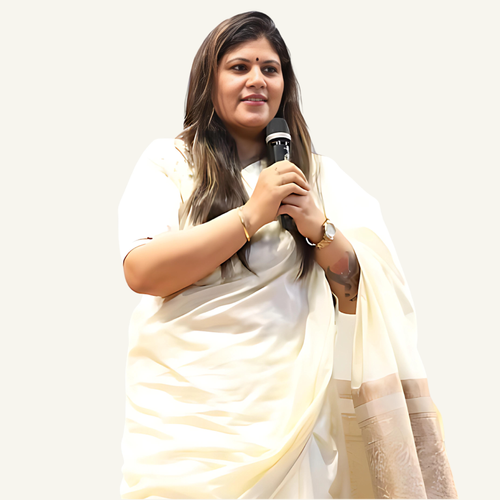 Dr. Rashhi Sharma, PhD
Founder and Lead Trainer of The School of Mediumship. She studied mediumship with Suzanne Giesemann in the United States and in person at Arthur Findlay College and The College of Psychic Studies in the United Kingdom. Full profile
 Prabhat Sharma
Trainer at The School of Mediumship. He studied mediumship in person at Arthur Findlay College and The College of Psychic Studies in the United Kingdom, and co-teaches every day of Level 1. Full profile
Continue Exploring
- What Is Shamanism?History, cultural diversity, journeying, practices and research, at Soul Consciousness Lab®.Read at SCL ↗
- Shamanism TrainingSoul Consciousness Lab®'s progressive residential pathway, from foundation to practitioner.Explore at SCL ↗
- Evidential Mediumship Level 1The School's dedicated residential foundation in evidential mediumship.Explore Level 1 →
References
- Spiritualists' National Union. Mediumship: the traditional understanding and purpose of mediumship.
- Foundation for Shamanic Studies. The Shaman as Psychopomp: workshop description and prerequisites.
- Soul Consciousness Lab®. What Is Shamanism? Meaning, History, Practices, Science and Ethics.
- Hunter, J. Spirit Possession in Cross-Cultural Perspective. Psi Encyclopedia, Society for Psychical Research. Discusses Eliade, Bourguignon and the shamanism–mediumship boundary.
- Soul Consciousness Lab®. Shamanism Training in India: Residential Practitioner Pathway.
- Sala, G. and Gobet, F. (2017). Does far transfer exist? Negative evidence from chess, music, and working memory training. Current Directions in Psychological Science, 26(6), 515–520. doi:10.1177/0963721417712760
- Grant, B. (2021). Slippage: an anthropology of shamanism. Annual Review of Anthropology, 50, 9–22. doi:10.1146/annurev-anthro-101819-110350
- MAP Academy. Bhuta Kola: ritual performance tradition of Tulu Nadu, coastal Karnataka.
- Hove, M. J. et al. (2016). Brain network reconfiguration and perceptual decoupling during an absorptive state of consciousness. Cerebral Cortex, 26(7), 3116–3124.
- Delorme, A., Beischel, J., Michel, L., Boccuzzi, M., Radin, D. and Mills, P. J. (2013). Electrocortical activity associated with subjective communication with the deceased. Frontiers in Psychology, 4, 834. doi:10.3389/fpsyg.2013.00834
- Marie, N. et al. (2024). Scoping review on shamanistic trances practices. BMC Complementary Medicine and Therapies, 24. doi:10.1186/s12906-024-04678-w
- Arthur Findlay College. Our Courses: levels and separate expectations for evidential and trance mediumship.
- Gallo, J., Wahbeh, H., Zemel, S. and Ruickbie, L. (2026). Evaluation of English-speaking medium and trance channeler certifications. Journal of the Society for Psychical Research, 90(3), 164–187. doi:10.63499/dswkb305
Institutions and studies are cited to document how training is structured and what research has examined. Citation does not imply endorsement of the School or of Soul Consciousness Lab®. Programme details (dates, fees, places) are kept on the programme pages.