
The School of Mediumship · Knowledge library
Evidential Mediumship Explained Evidence begins with recognition
A meaningful message may comfort someone. Evidential mediumship asks an additional question: who is understood to be communicating, and what information allows the person receiving the sitting to recognise them?
In the Spiritualist tradition, evidential mediumship is a form of spirit communication in which a medium seeks to convey specific, connected information about a person believed to be in the spirit world. The medium describes what they perceive; the sitter decides what they recognise.
This guide examines what counts as stronger or weaker information, how a communicator is developed during a sitting, why a message is not the same as evidence, and what ethical responsibility means in practice. It is the discipline at the centre of the School’s first course.
Connected details offered by the medium; recognition belongs to the sitter.
In brief
Evidential mediumship aims to present recognisable details about an identifiable spirit communicator, rather than only general advice or reassurance. Recognition is meaningful within the tradition, but it does not, by itself, scientifically establish the source of an impression.
The purpose of the practice
What Does “Evidential” Mean Here?
The word evidential refers to the intention to offer information a sitter can recognise as characteristic of a particular person who has died.
It does not mean that every detail will be recognised, or that a reading carries the same evidential status as a controlled scientific experiment.
The medium may report inner images, words, sensations or knowing. Those experiences are the starting point; they are not yet evidence of anyone’s identity. The medium, the spirit communicator and the sitter are introduced in What Is Mediumship?
The next task: develop the account carefully
- Does the information form a coherent picture of one person?
- Does it relate to distinctive aspects of their character, relationships and life?
- Is the sitter recognising the account without having supplied the answers?
These questions are more useful than the medium’s confidence or the emotional force of a single sentence.
A sitter’s recognition is their own assessment. A medium cannot award themselves a successful identification, and should never suggest that someone must eventually recognise information that currently makes no sense.
How evidence develops
From an Impression to a Recognisable Person
The difference between an isolated impression and a developed communicator is easiest to see through an example.
The one below is fictional and designed solely for teaching; it is not presented as a real or successful sitting.
First impression
An older man, the sound of a radio
By itself this could fit a great many people. It is not enough to identify anyone.
Connected details
- Read the morning newspaper aloud to whoever was nearby
- Kept a small transistor radio tuned to cricket commentary
- Called the sitter by a pet name no one else used
Still claims, not established facts; but more connected and potentially distinctive.
The sitter’s response
- Recognises a grandfather and confirms particular details
- Recognises only part of them
- Recognises none of them
The sitter is free to disagree and should not be asked for a family history that fills in the gaps.
An illustrative teaching example; no real sitter or communication is depicted.
A responsible conclusion
An account with several distinctive, independently recognised details may mean more to a sitter than a broad description. It remains a sitting, not an experiment that determines the ultimate origin of the information.
Development, not accumulation.
Saying twenty unrelated things and counting the few that fit is not the same as communicating a coherent character, relationship and life. The medium must also notice, and with consent record, what did not fit.
Specificity, connection and context
The Layers of Recognisable Evidence
Evidence does not arrive in only one form.
In careful practice, a medium may work with several kinds of information, neither ranking one type rigidly above the others nor treating all details as equally useful.
Personality and manner
A characteristic sense of humour, way of addressing a family member, impatience, warmth or familiar mannerism can identify someone more vividly than a general statement of love.
Relationships
The place a person held within a family or friendship, and the nature of those relationships, may help a sitter recognise who is being described. A relationship label alone is rarely enough.
Everyday life
Work, hobbies, food, clothing, routines, favourite places and belongings can carry unusually personal meaning. The apparently ordinary detail may be the one the sitter knows best.
Shared memory
A specific event, private joke, festival routine or conversation can be meaningful, provided the medium has not led the sitter to supply it.
Names, dates and places
These can be valuable when they arise naturally. They are not a performance target, nor do they rescue an otherwise vague or contradictory communication.
Circumstances of passing
Some readings include impressions connected with illness or death. These require special sensitivity. A medium should not dramatise physical distress, announce unverified medical facts, or expose intimate information publicly.
Recent circumstances
A sitter may recognise a current family event, an anniversary or a treasured object. The medium must be careful not to infer too much from the sitter’s appearance or responses.
How the details fit together matters
Some information is common; some is rare. A connected account with independent recognition can mean more than an impressive-sounding list of unrelated specifics. This is a practical standard of responsible presentation, not a claim that the source has been scientifically demonstrated.
Identity before reassurance
Evidence and Messages Are Not the Same
A message may be tender, wise, consoling or personally important. Yet a message alone may reveal little about who is supposed to be communicating.
In evidential practice, teachers often emphasise allowing the communicator’s character and lived experience to emerge before placing weight on a message. This does not make consolation unimportant. It means emotional impact should not be mistaken for identification.
A communication can include both: recognisable details about a person, followed by a message the sitter finds meaningful. But the medium cannot guarantee either. Not every reading develops clearly, and ethical practice includes knowing when an attempted communication has not reached sufficient recognition.
A message
You are loved, and you will be all right
may comfort someone who is grieving, but many people could say it.
An evidential communication
first describes a distinctive personality, a relationship and several recognisable life details. It asks something different of both the medium and the sitter.
Recognition is the sitter’s to give.
A careful progression, not a script
What Happens During an Evidential Sitting?
Teachers vary in how they begin and organise a sitting. The following is a responsible educational framework, not a sequence that guarantees contact with a particular person. A shorter overview is in What Is Mediumship?
Establish expectations
The medium explains what the sitting involves, its boundaries, confidentiality and the possibility that no recognisable communication may develop. The sitter can decline, pause or end the session.
Prepare and attend
The medium settles their awareness and begins without demanding a named relative. In the tradition, practices such as sitting in the power may support this preparation; they are not a device for guaranteeing a result.
Describe the first impressions
The medium reports what seems to arise, as accurately and simply as possible. A vague image is described as vague, not translated straight into a dramatic claim.
Develop a communicator
The medium works towards connections between personality, relationship, memories and everyday details. The aim is a recognisable person, not a chain of guesses.
Receive limited, non-leading feedback
The sitter can say whether something is recognised. The medium should not require explanations that supply the next stage of the reading.
Allow meaning, then close
If a communication is sufficiently developed, a message may follow. The sitting ends clearly and sensitively, without pressure to make decisions or book further readings.
These stages are not a scoring system.
A good student is not someone who performs every stage with dramatic certainty, but someone who learns to identify what was perceived, what they added, what the sitter recognised and what remained unresolved.
The person receiving the reading has a voice
The Sitter’s Role: Recognition without Pressure
A sitter is not passive, yet should never be recruited to build the communication for the medium.
They are the person best placed to decide whether an account resembles someone they knew. Their feedback matters, and their ability to say “no” must be protected.
Clear, limited feedback can help
- Yes, I recognise that
- That is partly familiar
- I am not sure
- No, I do not recognise it
They do not owe the medium an explanation or a family biography.
Leading exchanges reduce clarity
- Was your father strict?
- Who in your family smoked?
- Could this be your aunt?
These risk moving the work of identification from medium to sitter. An ethical reading does not turn a sequence of guesses into apparent evidence by pressing for agreement.
Non-recognition remains non-recognition
A medium can acknowledge that a detail has not landed without insisting it will be confirmed later. A sitter may check with relatives if they wish, but a later possible match should not be quietly counted as a confirmed one.
A sitter is free to stop
Bereavement, a difficult death and private family matters can arise unexpectedly. Consent includes the right not to continue, or not to explore a sensitive subject.
The School’s teaching rests on a relationship of respect: the medium offers the account, the sitter evaluates it, and neither should feel compelled to claim certainty.
Why discernment is practical
Common Ways a Reading Becomes Less Evidential
Learning to communicate responsibly includes recognising ordinary ways an account can seem convincing without identifying a communicator.
These problems can arise through error, expectation, habit or deliberate deception; they are not all evidence of bad intention.
Broad statements
“There was a strong woman in your family” may sound personal yet fit many families. The answer is not theatrical specificity but a coherent account the sitter can assess.
Fishing and leading questions
Offering options until one is accepted moves information from the sitter to the medium. Simple feedback is different from supplying the answer.
Interpretation presented as perception
A flash of a railway station does not justify an invented story about a railway accident. A medium should separate the original impression from its proposed meaning.
Many statements, selective counting
Numerous guesses will produce occasional matches. A responsible account does not disregard errors or reinterpret every miss as success.
Prior information
Social media, publicity, conversations before a sitting or details from third parties can colour what appears to be independently received. Transparency matters whenever a medium already knows something about a sitter.
Sitter expectation
People who deeply want a particular connection may supply meaning or accept vague statements. Protecting their autonomy is part of the medium’s responsibility, especially in bereavement.
These considerations appear in psychological discussions of cold reading and information leakage. Their relevance does not mean all mediums intentionally deceive. It explains why careful feedback, limited prior information and honest handling of misses matter.
Calling a reading what it is
Psychic Impressions, Communicators and Messages
Impressions about a sitter’s present circumstances, a familiar object or a family relationship may be described as psychic awareness. They do not automatically identify someone who has died; the distinction is explained in What Is Mediumship? Evidential mediumship makes a more specific claim: a coherent communicator whose characteristics and lived details the sitter can recognise.
Nor is a warm message, by itself, evidence of a communicator. A declaration of forgiveness or encouragement may matter deeply to the person who hears it, but unless an identity has been responsibly explored, it should not be presented as proof of contact with a particular person. This is not an argument against psychic development or inspirational work; it is an argument for describing each reading accurately.
What investigators actually examined
Evidential Mediumship in the Historical Record
By the late nineteenth century, some investigators were asking questions that remain central to evidential practice.
- How specific is the information?
- Could the medium have learned it beforehand?
- How faithfully was the sitting recorded?
- Were the misses reported as well as the apparent successes?

An early investigation
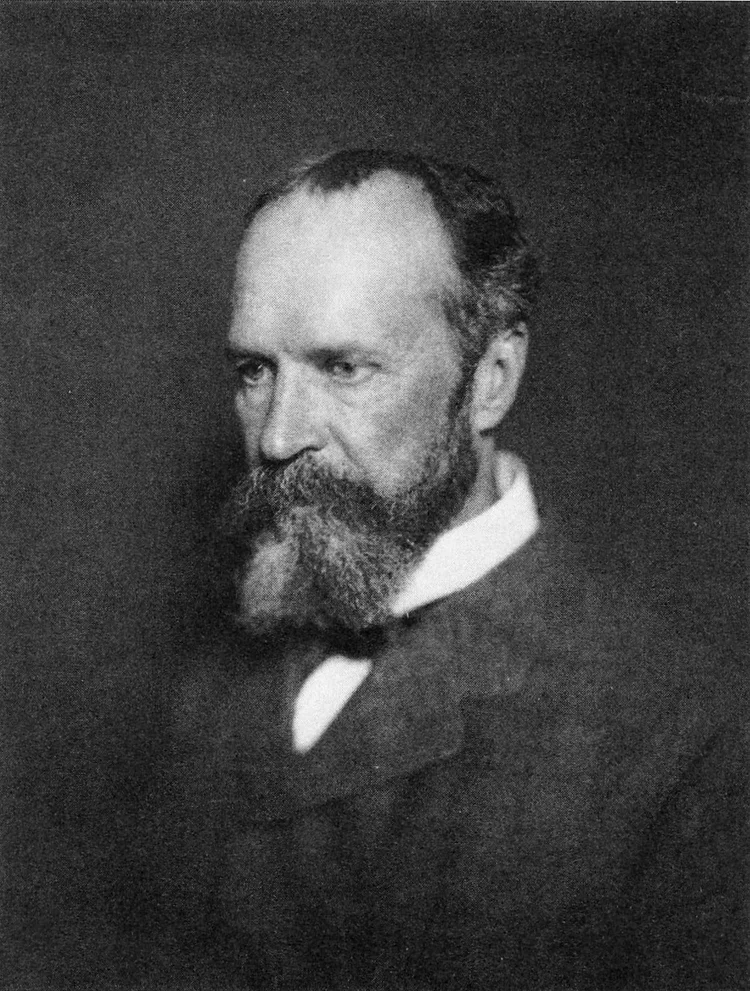
William James and Leonora Piper
The American psychologist William James investigated the Boston medium Leonora Piper and encouraged further study by psychical researchers. Her sittings were examined under different arrangements over many years.
Some investigators found the material unusually informative; others questioned the interpretation and the possible sources of information. What matters here is the attempt to document and test, rather than rely on the impression left by one striking sitting.
Research designs still discussed today
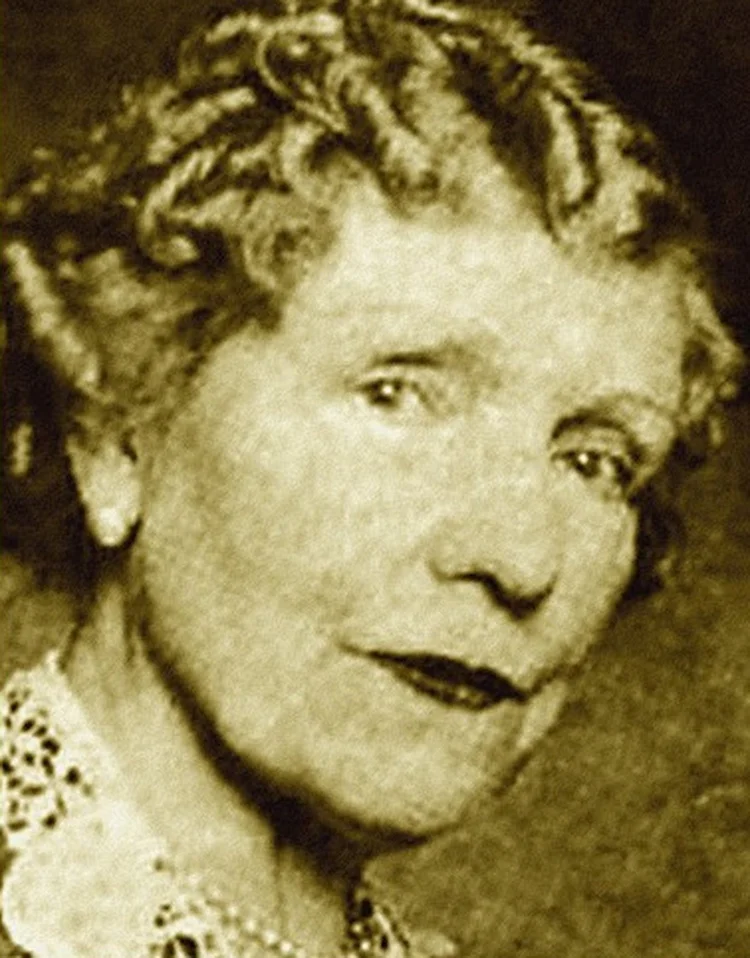
Gladys Osborne Leonard and the proxy sitting
The British medium Gladys Osborne Leonard (1882–1968) sat for the Society for Psychical Research from 1915. Investigators developed two designs with her:
A stranger attended on behalf of the person who wanted contact, so that the one person who knew the details was not in the room. Nea Walker organised long series of proxy sittings, published in 1927 and 1935, and C. Drayton Thomas reported a detailed proxy case in 1935.
The communicator was asked to identify a book on a shelf in a named house, then a page and a passage, information the sitter was not expected to know. In 1921 Eleanor Sidgwick analysed 532 such tests, judging17%successful and36%partly successful; a later comparison with deliberately invented “tests” produced far fewer matches.
The physicist Oliver Lodge sat with Leonard in 1915–16 after his son Raymond was killed in the First World War, and published the sittings in Raymond, or Life and Death (1916). The record also has limits: long relationships with regular sitters, the chance of overheard remarks, messages too general to identify anyone, and disagreement about scoring and interpretation. Some researchers who studied Leonard closely concluded that she had remarkable abilities, yet did not consider survival proven.
The lesson for education
These cases do not settle the survival question. They show why reporting exactly what was said, separating accurate from inaccurate details and asking where information could have come from has a long history. Those habits can shape a student’s practice without turning a practice sitting into a laboratory experiment.
Personal recognition and scientific inquiry
What a Sitting Can and Cannot Show
In Spiritualist and related traditions, a sitter’s recognition of connected, personal information may be experienced as meaningful evidence of a communicator’s identity and of the continuity of life.
That is the language of the practice and its spiritual understanding. Controlled studies have reported mixed results, and even an apparently accurate result does not by itself show where information came from. Our introductory guide summarises the main studies.
In a sitting
Recognition
The sitter recognises connected, personal information about someone they knew.
Meaningful within the tradition, and personally significant to the sitter.
In research
Controlled questions, asked first
- Was an accurate statement made?
- How specific was it?
- Could it have been known by ordinary means?
- Did the sitter judge it without knowing which reading was meant for them?
- Was the result better than a suitable control, and could it be repeated?
The School teaches the evidential discipline within Spiritualist practice. It does not present a student sitting as scientific proof of survival, and it does not need to dismiss a sitter’s meaningful experience to acknowledge that the scientific question remains open.
Responsibility towards the sitter
Ethics Are Part of the Evidence
A medium can present a seemingly specific account and still handle the sitting irresponsibly.
Evidence and ethics belong together: the sitter’s privacy, autonomy and wellbeing matter as much as the medium’s clarity.
Consent and expectations
Explain what is offered and what cannot be promised. Never assure someone that a named relative will come through, or that a sitting will resolve their grief.
Sensitivity to bereavement
A sitter may carry a recent death, unanswered questions or complicated family relationships. A medium should not probe trauma, encourage dependence or offer a reading in place of bereavement support.
Discretion
Names, circumstances of death, health and family matters may be deeply private. Public work needs additional care because others are listening. No identifying story, recording or image should be shared without permission.
No damaging instructions or predictions
Mediumship is not a route to medical, legal or financial advice, fear-based warnings or instructions about relationships and treatment.
Honesty about uncertainty
Being able to say “I may have misunderstood”, “That isn’t recognised” or “I don’t know” is a professional strength. A disappointing sitting should not be rewritten as a success.
From understanding to supervised practice
What Responsible Development Looks Like
It is possible to understand what evidential mediumship means without yet being able to offer a considerate, coherent sitting.
Reading is a beginning; practice is where the real work happens: noticing one’s own experience, separating it from interpretation, communicating clearly and receiving another person’s genuine response.
A careful programme helps students prepare without forcing an outcome; describe what arises before embellishing it; distinguish information about the sitter from claims about a communicator; work with recognisable life details; practise consent and non-leading feedback; and reflect on mistakes with a teacher.
Development is not measured by dramatic experiences. A vivid image or emotional moment does not make a student professionally ready, and finishing a course does not prove that a person can communicate with the dead. Public work requires further practice, observation, ethical judgement and the ability to handle uncertainty.
What students practise
- 1Perceive
- 2Describe
- 3Receive feedback
- 4Reflect
A framework for supervised learning, not a guarantee of spirit communication; the sitter recognises, or does not recognise, what is offered.
At The School of Mediumship
The practical foundation is Evidential Mediumship Level 1: a six-day, fully residential programme in Bengaluru for a maximum of twelve students, with guided exercises, supervised partner sittings and sustained faculty observation. Dates, hours, fees, accommodation and entry conditions are kept on the programme page, so there is one definitive source. Level 2 and the specialist pathways remain in development.
Practical questions, careful answers
Questions about Evidential Mediumship
Something not answered here? Ask us; we usually reply within 24 hours.
Is a specific name necessary for an evidential sitting?
No. Names can be meaningful, but a connected account of character, relationship, habits and shared memories may be more recognisable. A name on its own also needs context.
Is a message evidence?
Not automatically. A reassuring message may be important to a sitter, but its emotional value is different from information that identifies a particular communicator.
What if the medium describes someone I don’t recognise?
You can say so. The medium should not press you to choose a relative, supply names or treat each disagreement as a hidden confirmation.
Can details be checked later?
Sometimes a sitter wishes to ask relatives or check records. Treat any later match carefully and keep a note of what was originally said; do not assume every unrecognised detail will be confirmed.
Does stronger evidence mean more facts?
Not necessarily. Many broad guesses can produce some matches. Connected specificity, clarity, independent recognition and openness about errors matter more than volume.
Should I tell the medium who I hope to hear from?
You don’t need to, and many teachers prefer that sitters share little in advance, so that any recognition is clearer. Do tell the medium about anything that would make the sitting distressing for you.
Can I record my sitting?
Ask first. A recording made with both people’s consent lets you check what was actually said, rather than relying on memory, which tends to keep the hits and lose the misses.
What is a proxy sitting?
A historical research design in which someone attends on behalf of the person who wants contact, so the one person who knows the details is not present. It was developed to reduce the chance of information passing, knowingly or not, from sitter to medium.
What were book tests?
An early-twentieth-century research method in which a communicator was asked to identify a book, page and passage in a named house, details the sitter was not expected to know. Results were analysed statistically and remain debated.
Are psychic impressions unacceptable in mediumship?
They may occur, but a practitioner should distinguish information about a living sitter from claims attributed to a communicator who has died. The distinction is part of honest practice.
Can a sitting be evidential if the medium is in trance?
“Evidential” refers to the aim of recognisable information; “trance” describes a reported state of awareness. They can overlap, but one does not establish the other. More on trance.
Do sitters have to give feedback?
Customs vary. Brief feedback can help a sitting stay clear, but sitters should never be required to give a detailed family history or agree with statements they do not recognise.
Further reading and programme pathways
Continue with Understanding, Then Choose
The central question in evidential mediumship is not whether an impression sounds impressive. It is whether the communication describes someone the sitter recognises, and whether it was offered with care, integrity and respect for uncertainty.
If you wish to explore the discipline as a reader, begin with What Is Mediumship? and Types of Mediumship. If you are considering learning to practise, read the Level 1 programme carefully, including its residential commitment and the nature of supervised development.
Our role is to help you choose with understanding, not to hurry you into an application.
References
Selected references
- Society for Psychical Research, Psi Encyclopedia, Gladys Osborne Leonard
- Psi Encyclopedia, Leonora Piper
- Psi Encyclopedia, Cold Reading
- Lodge, O. (1916). Raymond, or Life and Death. Wellcome Collection, Public Domain Mark.
- O’Keeffe, C. & Wiseman, R. (2005). Testing alleged mediumship: Methods and results. British Journal of Psychology, 96(2), 165–179. PubMed
- Beischel, J., Boccuzzi, M., Biuso, M. & Rock, A. J. (2015). Anomalous information reception by research mediums under blinded conditions II. Explore, 11(2), 136–142. PubMed
- Sarraf, M., Woodley of Menie, M. A. & Tressoldi, P. (2021). Anomalous information reception by mediums: A meta-analysis. Explore. PubMed
- Roe, C. A. & Roxburgh, E. C. An overview of cold reading strategies; Non-parapsychological explanations of ostensible mediumship. University of Northampton.
References are listed so readers can examine historical and research claims. They do not imply that the named institutions endorse the School, and experimental findings do not settle the source of mediumistic information.
Image sources
- HistoryWilliam James, photographed by Sarah Choate Sears (1890s). Original in Houghton Library, Harvard University. Public domain, via Wikimedia Commons.
- HistoryGladys Osborne Leonard, portrait published 1926. Public domain, via Wikimedia Commons.
- HistoryOliver Lodge, Raymond, or Life and Death (1916), title page. Wellcome Collection. Public Domain Mark.
- DiagramsEvidence threads, three-stage example, layers of evidence, six-stage sitting, strengthens/weakens and recognition/research: original School illustrations.