
The School of Mediumship · Knowledge library
Types of Mediumship Understanding the different forms
Mediumship is not a single method. In Spiritualist and related traditions, it may involve impressions perceived inwardly, communication in an altered state, expressive work such as writing or art, spiritual healing, or historical claims of effects that others could observe.
Some names describe how a medium experiences information. Others describe the purpose of the work, the form in which it is expressed, or the setting in which it is offered. This is why one person may practise mental, evidential and public-demonstration mediumship without those being three unrelated abilities.
This guide explains the major forms, where they overlap, how their traditions differ, and what responsible teaching asks of anyone who wishes to practise them. It builds on our introductory guide, What Is Mediumship?, rather than repeating it.
Four overlapping questions, not a ladder. See the full map ↓
In brief
The broadest traditional distinction is between mental mediumship, in which impressions are experienced through the medium’s awareness, and physical mediumship, which involves claims of externally observable phenomena. Evidential work, trance, healing, spirit art and inspirational communication are further descriptions of purpose, method or expression, not separate categories at the same level.
Before the different types
How Mediumship Is Classified A map, not a ladder
When someone asks, “What type of mediumship is this?”, the answer often depends on what they are trying to classify.
Spiritualist organisations, Spiritist authors and individual teachers do not all arrange the subject in exactly the same way. In the nineteenth century, Allan Kardec divided mediums broadly into those associated with physical effects and those associated with intellectual communications; many Spiritualist organisations today speak instead of mental and physical mediumship.
Four useful questions
Overlapping, not ranked-
1
Perception
How is the experience perceived?
Mental mediumship refers to impressions experienced through awareness: imagery, words, feelings, sensations and knowing. Physical mediumship describes claims of manifestations that would be externally observable, rather than only inwardly perceived.
-
2
Purpose
What is the communication trying to do?
Evidential mediumship seeks recognisable information about a spirit communicator. Inspirational speaking may convey spiritual philosophy or reflection without attempting to establish one identifiable person.
-
3
Expression
What is the means of expression or working state?
Trance, speaking, writing, drawing, portraiture and healing may describe the state or practice through which work takes place. A person may use more than one.
-
4
Setting
To whom, and in what setting, is it offered?
A private sitting, development circle and public demonstration create different responsibilities. These are settings, not wholly separate forms of perception.
Four questions help classify mediumship: how information is perceived, its purpose, how it is expressed, and the setting. These are overlapping categories, not a ladder.
A practical classification table
| Term | Primarily describes | How it relates to other forms |
|---|---|---|
| Mental mediumship | Mode of inward perception | May be evidential, inspirational, private or public |
| Evidential mediumship | Aim and standard of communication | Commonly practised through mental mediumship |
| Trance mediumship | Altered working state | May involve speaking, writing, philosophy or healing |
| Physical mediumship | Alleged externally observable effects | Historically investigated; disputed; not taught by the School |
| Healing mediumship | Spiritual purpose and practice | May be offered in ordinary awareness or trance |
| Spirit art and automatic writing | Form of expression | Can be inspirational, attributed to spirit, or accompanied by evidential claims |
| Public demonstration | Setting and presentation | Often uses evidential mental mediumship, with added audience responsibilities |
These distinctions explain why “evidential versus trance” is not a complete either-or comparison. One concerns the content and recognition of a communication; the other concerns a working state. Neither is a measure of spiritual superiority.
The common foundation
Mental Mediumship Perception through awareness
In mental mediumship, a practitioner reports receiving impressions through the mind and awareness rather than through an independently observed physical event.
In Spiritualist understanding, such impressions may be attributed to a spirit communicator. They are then described to a sitter, or conveyed in another setting, with attention to what is clear and what remains interpretation.
The word mental refers to perception, not to a psychiatric condition. People may describe inner imagery, a word that seems to arrive, a bodily feeling, an emotional quality or a sense of knowing; mediums often use the “clair” words for these, which our introductory guide explains. Experiences differ between mediums and may vary within the same sitting.
From impression to meaning
The clair words describe an experience; they are not separate certificates or proofs of spirit origin. A medium who reports an image of a red bicycle has not yet established what it means. They must consider whether it is a remembered fact, a symbol, an assumption or a detail with no relevance at all.
In a careful sitting, the medium first reports what was perceived, without quietly turning “red bicycle” into an elaborate story about a childhood accident. The sitter’s recognition, or lack of recognition, then becomes part of the feedback. Mental mediumship is a process of receiving, describing and evaluating impressions, not a licence to state every impression as a fact.
Perception is not the same as identity
The same apparent clairvoyant image might arise during psychic awareness, evidential mediumship or inspirational work. The sensory quality of an impression does not, by itself, identify its proposed source. This distinction becomes central when a medium claims communication with a particular person who has died.
What makes communication evidential
Evidential Mediumship A recognisable communicator
Evidential mediumship is an approach in which the medium attempts to provide information that the sitter can recognise as connected to a person who has died.
It is usually practised through mental mediumship, though traditions differ in how evidential claims are presented. The aim is not simply to offer a comforting message. Before placing weight on a message, the medium seeks to describe a coherent communicator. Recognition may involve character, relationships, an unusual manner of speaking, everyday habits, work, interests, shared memories or small details of family life.
A connected account matters more than a string of guesses
Imagine a medium describes an older woman who repaired clothing, kept a tin of coloured buttons by the window, and teased a grandchild about wearing mismatched socks. These details are illustrative, not taken from a real sitting. Their usefulness depends on whether the sitter independently recognises the person and the account, not on the medium’s confidence in telling it.
A name or date can be relevant, but no single kind of detail should become a rigid test of every sitting. What matters is the specificity, connection, context and independence of the recognition. The sitter, not the medium, decides what has been recognised. More on evidence and recognition.
One person, connected details
- Repaired clothing
- Kept a tin of coloured buttons by the window
- Teased a grandchild about mismatched socks
Illustrative only, not from a real sitting. The sitter decides what, if anything, they recognise.
From understanding to practice
In our Evidential Mediumship Level 1 training, students learn to distinguish an impression from their interpretation of it, develop connected information about a spirit communicator, and listen carefully to what the sitter does and does not recognise. These distinctions become clearer through guided exercises, supervised partner sittings and individual feedback, not through explanation alone.
A different working state
Trance Mediumship Altered states and blending
Trance mediumship is associated with an altered state of awareness in which a medium reports becoming more receptive to communication attributed to spirit.
Some teachers use the term blending for the sense of the medium and communicator drawing closer in awareness. The medium’s ordinary conscious involvement may become quieter, but the degree of awareness varies.
Trance is not necessarily unconsciousness. A practitioner may be aware of the words being spoken, partly aware, or later remember the experience differently. Historical accounts also use terms such as trance speaking, spirit control and overshadowing. These have particular meanings within particular traditions; they should not be adopted uncritically as proof that an outside personality took possession of a body.
Degrees of awareness
Illustrative teaching aid- Ordinary awarenessFully present; aware of every word
- Light trancePartly aware; attention quieter
- Deeper tranceLess recall of what was said
Not a measured scale, and not a ranking of reliability. Trance is described through different degrees of conscious involvement; terms and experiences vary across teachers.
Trance in history
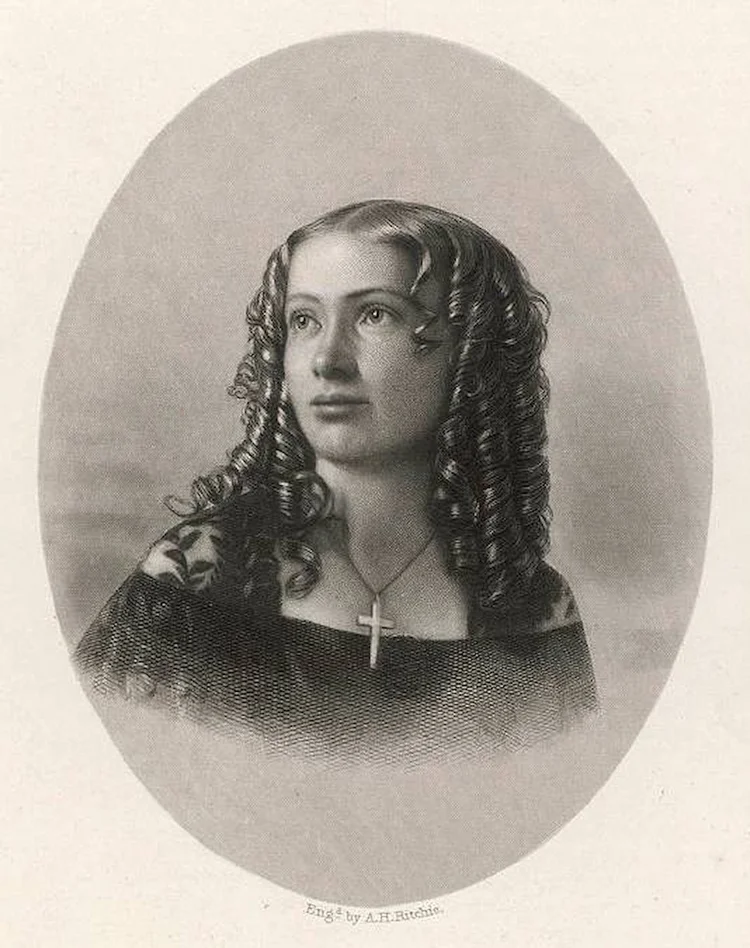
Trance speaking was a public feature of nineteenth-century Spiritualism. Cora L. V. Scott, later Richmond (1840–1923), began speaking in trance at about eleven and was lecturing to audiences by fifteen, often on subjects proposed by the audience.
Admirers saw her fluency as evidence of spirit; others did not. Either way, her career shows how central trance lecturing once was to the movement.
Forms of expression associated with trance
Trance may be associated with speaking, inspirational philosophy, writing or spiritual healing. Some practitioners describe a familiar voice or changed manner of expression; these are descriptions of reported experience, not, by themselves, evidence of who or what produced it.
A person who speaks inspiring words in meditation is not automatically practising trance mediumship. Nor is a deeper altered state necessarily a more accurate one. Confidence, voice changes, physical stillness or a striking performance do not establish that a communication originates with spirit.
Why specific preparation matters
Training in trance is not simply an instruction to surrender awareness. A responsible teacher explains the proposed practice, obtains informed consent, sets boundaries, observes how the student responds and encourages the ability to stop and return to ordinary attention.
Students should not be pressured towards dramatic states, deprived of sleep or told to ignore distress in order to demonstrate progress.
The School treats trance as a distinct future specialisation requiring its own curriculum and safeguards. It is not part of the current Evidential Mediumship Level 1 syllabus. Nothing on this page is an invitation to undertake unsupervised altered-state exercises.
Historical phenomena and investigation
Physical Mediumship The history of observable claims
Physical mediumship is the traditional name for claims that something occurs outside the medium’s inward awareness and could, in principle, be observed or measured by others present.
Nineteenth- and early-twentieth-century séance accounts describe raps, table movement, voices apparently heard independently of a medium, the appearance of objects, luminous effects, or the apparent formation of figures or substances.
Terms most often met in historical sources
- Claimed
Raps and table movement
Sounds or movements attributed to a communicating intelligence.
- Claimed
Direct or independent voice
A claim that a voice is audible in the room rather than heard inwardly by the medium.
- Claimed
Apports
Objects said to appear or be transported without an ordinary mechanism.
- Claimed
Materialisation and ectoplasm
Claims of visible or tangible forms or substances appearing during a séance.
- Claimed
Transfiguration
A reported change in a medium’s appearance; classification varies by source.
- Claimed
Independent writing and precipitated images
Claims of writing or images appearing without ordinary manual production.
Descriptions of what observers or practitioners claimed. They are not established demonstrations that spirits can move objects or materialise.
Intense investigation, competing interpretations, illusion and documented deception.
A case worth studying
The Davenport brothers
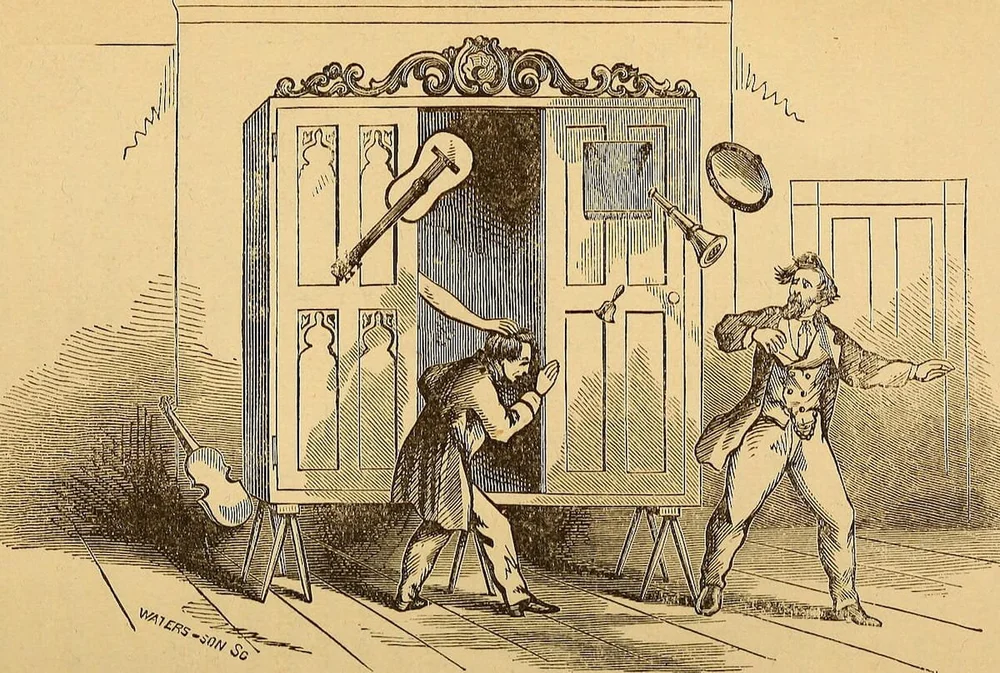
In the 1850s and 1860s, the American brothers Ira and William Davenport toured with a “spirit cabinet”. Tied up inside it, they produced music, sounds and moving objects, and their presenter told audiences these were spirit manifestations.
In 1865, during their British tour, the actor Henry Irving and the stage magician John Nevil Maskelyne each reproduced the effects publicly by ordinary means. Many years later, Ira Davenport told Harry Houdini that the phenomena had been tricks.
The case shows why a physical claim needs independent controls, open investigation and a willingness to report negative findings.
Other physical mediums, such as Eusapia Palladino (shown on our introductory guide), remain debated, with both striking reports and recorded cheating.
The School does not teach physical mediumship. It is included here because a serious reference guide should explain its place in the field and the controversies attached to it.
A spiritual practice, not medical treatment
Healing Mediumship Spiritual care and its boundaries
Within Spiritualist teaching, healing mediumship describes a practice in which a healer understands themselves to work receptively with spiritual intention or influence for another person’s wellbeing.
Different traditions speak of prayer, attunement, contact healing, near-body work and distant or absent healing. Some distinguish ordinary healing work from trance healing, in which an altered state is part of the practice.
The purpose differs from an evidential sitting. The healer is not necessarily identifying a communicator through recognised memories; the setting concerns spiritual care, with its own boundaries, expectations and ethical training.
Aim
Spiritual care
A person may describe calm, comfort or a valued spiritual experience after such work.
What it does not establish
A medical effect
These are personal experiences and do not establish a specific medical effect. Spiritual healing is not a substitute for health assessment or treatment.
Responsibility
What responsible healing work requires
Informed consent is essential, especially for touch. The recipient should know whether work involves contact, near-body practice, prayer or distant intention, what the session involves, and whether a fee applies. Confidentiality matters.
A practitioner should never diagnose disease, change medication, promise a cure or discourage someone from seeking medical attention.
Healing practices are not interchangeable
- Spiritualist healing
- Reiki
- Shamanic healing
- Clinical treatment
Spiritualist healing, Reiki, shamanic healing and clinical treatments have distinct histories, explanatory systems and professional responsibilities. A practitioner trained in one is not automatically trained in all. Because the word healing is used in many ways, a practitioner should explain which practice they mean.
Healing Mediumship is among the School’s future specialist directions. No Healing Mediumship course is open for booking; its scope and faculty will be published when approved.
When creative work becomes a mediumistic practice
Spirit Art and Art Mediumship Expression, portraiture and evidence
Spirit art is a broad description for visual work that a practitioner understands to have been inspired, guided or influenced by spirit.
It can include abstract drawings, symbolic images, spontaneous mark-making, watercolours and portraits. The form of expression matters, but it does not settle what kind of claim is being made about the artwork. There are three important distinctions.

Houghton understood her intricate compositions as spirit-inspired; that attribution is part of their history, not proof of a supernatural source.
Georgiana Houghton (1814–1884). Public domain, via Wikimedia Commons.Three important distinctions
Inspirational or symbolic art
A painting may arise from a felt connection, prayer or a receptive state, and may express something meaningful to its creator or viewer. Its spiritual meaning does not depend on a sitter identifying a particular person who has died.
Portraiture offered as evidence
An artist may present a portrait as connected to a communicator known to a sitter. That introduces a recognisable claim. The sitter must be free to assess likeness and related information without pressure. A portrait that feels moving is not automatically an identification, and an artist should not reinterpret every resemblance as confirmation.
Automatic or spontaneous drawing
Some historical practitioners described drawing while their hand moved with little deliberate planning, sometimes in trance. Such work may be discussed both as art and as automatism. A reported feeling of involuntary movement is an account of the creative process, not proof of an external agent.
Two important historical artists
Anna Mary Howitt Watts began producing drawings she attributed to spiritual influence in the 1850s. Georgiana Houghton developed remarkable abstract spirit drawings in the 1860s and exhibited them publicly in 1871 at the New British Gallery in London’s Old Bond Street.
Their work belongs to the history of modern art as well as Spiritualism; it is valuable even when readers do not share their interpretation of how it was made.
At the School
Art & Mediumship is a planned specialist field. Its eventual course must distinguish artistic technique, spiritual inspiration and any proposed evidential portrait work, rather than implying that the same criteria apply to all three.
Writing as a form of communication
Automatic Writing and Psychography When the medium writes
Automatic writing describes writing reported as arising with little deliberate planning or conscious authorship.
In some Spiritualist and Spiritist settings it is attributed to a spirit communicator; in other settings it is considered an expressive, imaginative or psychological process. The observable fact that words were written does not identify their source.
Kardec’s descriptions
Allan Kardec’s The Mediums’ Book (1861) set out several historical descriptions of what he called psychographic writing:
- MechanicalThe hand was said to move without the writer consciously deciding the words.
- Semi-mechanicalMovement was experienced as involuntary while the writer remained aware of the words.
- IntuitiveThe writer experienced a thought and wrote it with ordinary movement.
- InspiredIdeas arrive without any sense of an outside hand.
These are categories within Kardec’s account, not scientifically verified mechanisms.
The distinction matters because automatic is sometimes used for all inspired writing, even though writers describe different degrees of awareness and control. A fully conscious person who writes a spiritually inspired reflection is not claiming the same thing as a historical practitioner who reported involuntary movement.
The planchette
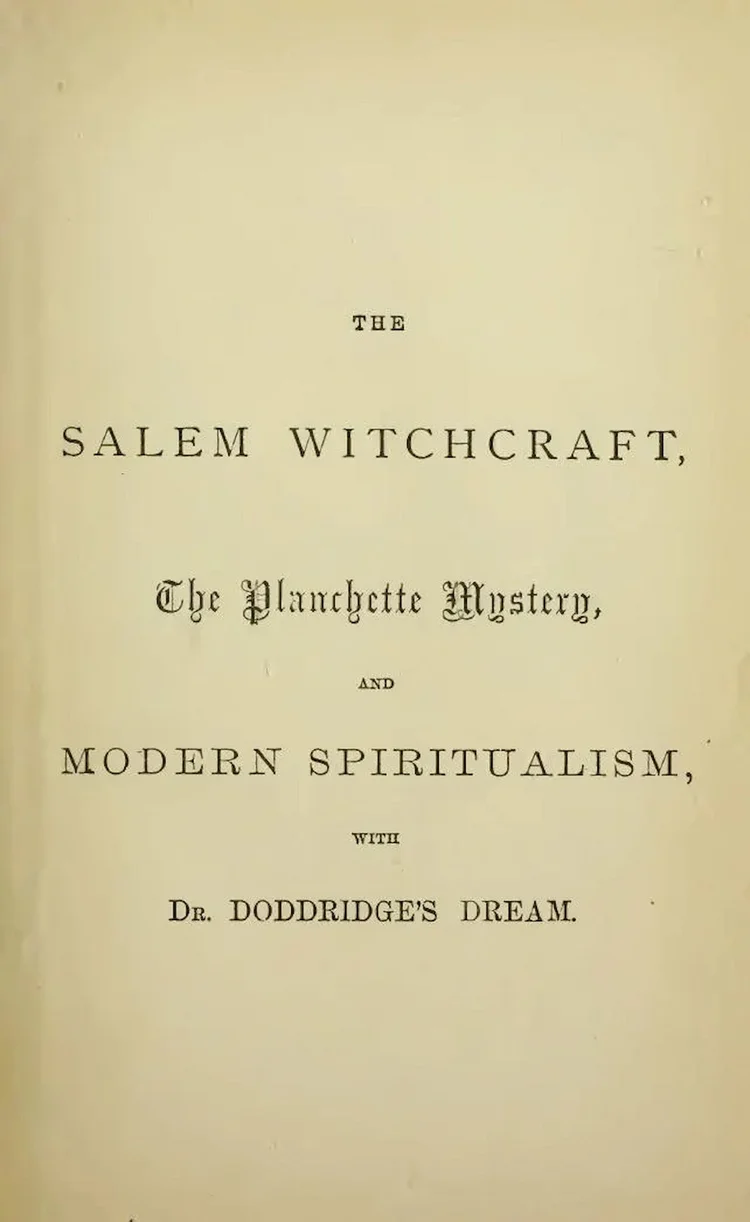
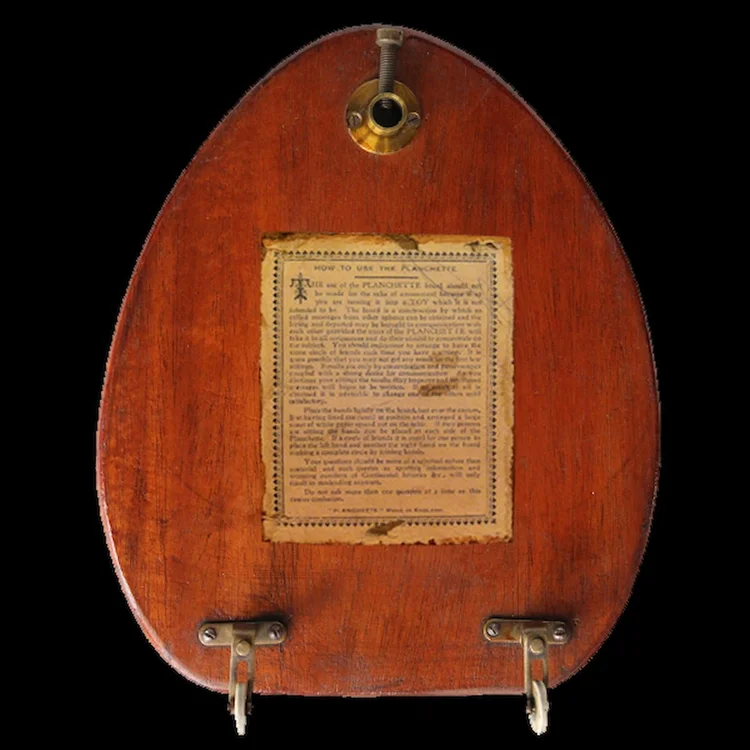
In the nineteenth century, some experimenters used a planchette: a small heart-shaped board on castors, holding a pencil, on which one or more people rested their hands. It was sold as a parlour device and discussed in popular books of the time.
A historical example
The cross-correspondences
In the early twentieth century, researchers associated with the Society for Psychical Research examined automatic writings produced by several people, sometimes in different countries. Investigators believed certain fragments connected in unusual ways, while others questioned the interpretation and the ordinary sources of information.
The cross-correspondences remain a case study in the difficulty of separating what a script says, how it was produced and what might explain it.
Writing that seems unusually fluent or moving is not, by itself, evidence of a particular communicator.
Responsible evaluation requires attention to prior knowledge, suggestion, attribution, context and independent recognition. The School does not treat automatic writing as interchangeable with an evidential sitting; it may be examined within future specialist education once curriculum and safeguards are approved.
Meaning, expression and attribution
Inspirational Speaking and Channelled Communication
Inspirational speaking describes thoughts, words or philosophy that a person experiences as arriving in a receptive or spiritually inspired way.
Inspirational writing is its written counterpart. In some Spiritualist traditions the inspiration is understood to come from spirit teachers or communicators. In other settings, similar experiences may be described as creativity, intuition or religious inspiration.
The term channelling is used more broadly and inconsistently. Some practitioners mean communication attributed to a person who has died; others mean a guide, a non-human intelligence, a spiritual source or a higher aspect of awareness.
We state which meaning we intend, so that the word does not imply an evidential claim it does not make.
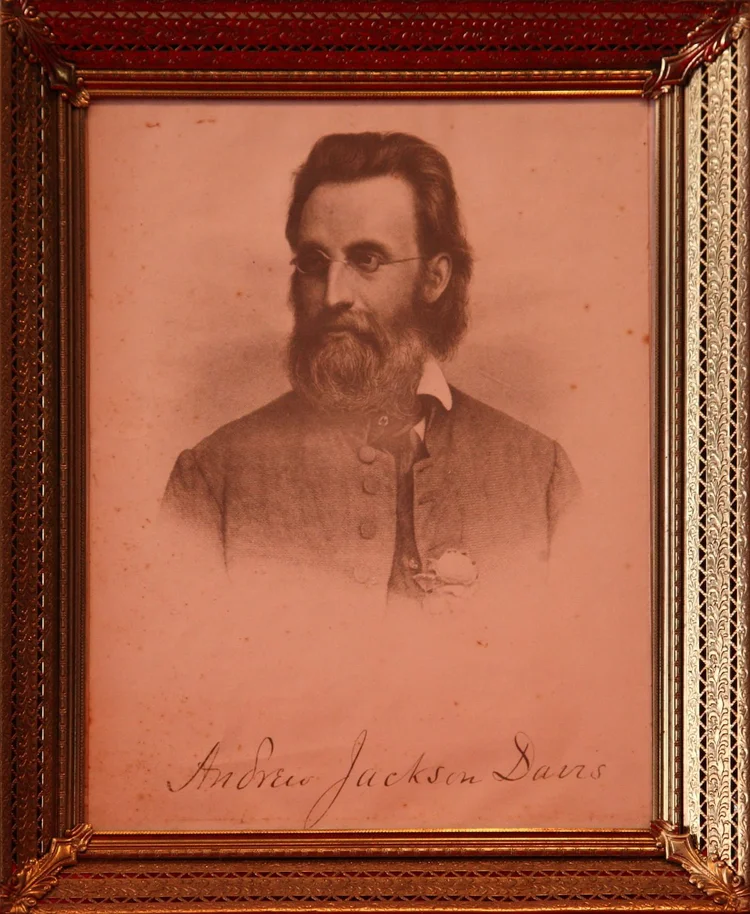
Where inspiration and trance overlap
Both might convey philosophy or a message; neither state, by itself, identifies the proposed source. Historical teachers disagree about where inspiration ends and trance begins.
The overlap is old. In the 1840s Andrew Jackson Davis, known as “the Poughkeepsie Seer”, dictated The Principles of Nature in what he described as a trance, years before modern Spiritualism had a name. Readers then, as now, disagreed about where his ideas came from.
Inspirational & Channelled Communication is a future area of specialist study at the School. Its scope, terminology, entry conditions and teaching responsibilities have not yet been published.
The setting changes the responsibility
Private Sittings, Development Circles and Public Demonstration
These are not three perceptual faculties. They describe where and how mediumship is practised, and who is affected by it.
The same medium may work in more than one setting, but the responsibilities are not identical. What happens in a private sitting is set out step by step in our introductory guide.
One to one
Private sittings
A private sitting allows time to set expectations, convey information, hear responses and close well. Privacy can make emotional conversations safer, but it also means the medium must take care not to build on information revealed in conversation.
A learning group
Development circles
A development circle is a regular group in which students practise under an agreed structure, often with an experienced teacher. It is a learning setting, not a promise that every exercise will produce recognisable communication. Participants need clear agreement about confidentiality, feedback, recordings and how practice experiences may be discussed elsewhere.
Before an audience
Public demonstrations and platform mediumship
Here mediumship takes place before an audience, often within a Spiritualist service or event. A statement about a cause of death, health or a family matter affects not only the intended recipient but everyone listening.
Public work therefore asks for clear communication, restraint with sensitive subjects, respectful handling of non-recognition and a dignified close. Someone who gives a thoughtful private sitting does not automatically have the preparation to work before a group.
The School’s Level 1 includes supervised work before fellow students. That practice is not a qualification to give public demonstrations; Public Demonstration Mediumship remains a proposed specialist pathway.
Terms readers may encounter
Other Terms You May Hear
Mediumship vocabulary has developed across different centuries, religious traditions and teaching communities. Not every label describes a separate programme, and some name disputed reported phenomena rather than an accepted capability.
- Direct voice
- A historical physical-mediumship claim of a voice audible independently in a room; unlike inward clairaudience.
- Transfiguration
- A reported change, or apparent change, in a medium’s appearance; interpretations and classification differ.
- Materialisation
- A historical claim that a visible or tangible form appears during a séance; not established as a scientific fact.
- Apport
- An object claimed to appear or move by extraordinary means; requires stringent documentation.
- Psychography
- In Spiritist writing, communication attributed to spirit through writing, with several historically described forms.
- Planchette
- A small board on castors holding a pencil, used historically for automatic writing.
- Spirit portraiture
- Art presented as a depiction of a communicator; recognisability is a separate claim from artistic quality.
- Spirit control
- A historical term for a communicator or guide said to influence a trance medium; can mislead if taken literally.
- Trance healing
- Healing undertaken in an altered state, within some Spiritualist traditions; not medical treatment.
- Independent writing
- A historical claim of writing appearing without ordinary physical writing by the medium.
Electronic voice phenomena and instrumental transcommunication are sometimes grouped with spirit communication. They are not what the School means by mental mediumship and should not be treated as confirmed evidence of the dead.
Accounts of possession, oracles or ancestor rites in other traditions likewise deserve explanation in their own cultural terms, rather than relabelling as modern Spiritualist mediumship.
From curiosity to responsible study
How Do You Choose What to Study?
Interest in a particular form does not mean that it should be the first practical course someone takes.
The right starting point depends on background, expectations, the ability to take part in supervised work, and the entry conditions of the eventual programme.
Recognising communicators
If your interest is in recognising communicators and learning how a private sitting works, a foundation in evidential mental mediumship is a relevant place to begin.
Open now · Level 1Trance
If you are drawn to trance, first understand how that tradition describes awareness, consent and communication, and what preparation a specialist teacher requires.
Spirit art
If spirit art appeals to you, distinguish inspirational expression from a claim of recognisable portrait evidence.
Healing
If healing interests you, learn the boundaries of spiritual care and touch before making any claims of practice or outcome.
Someone already familiar with mediumship should not assume that competence in one setting transfers automatically to another. Public demonstration, for example, adds responsibilities not met in the same way in private work.
Questions worth asking any training provider
- Which tradition and form of mediumship is actually being taught?
- Is this an introduction, a supervised practical programme, an advanced specialisation or a knowledge-only event?
- What prior development, if any, is expected?
- Will teachers observe practice and give meaningful feedback?
- How are evidence, uncertainty, consent and sitter welfare handled?
- What exactly does the certificate record, and what does it not confer?
- Is the programme open for enrolment now, or only planned?
At The School of Mediumship
Practical training is taught in person.
Our in-person residential training begins with the foundations of evidential practice; our current bookable programme is Evidential Mediumship Level 1, a six-day residential foundation. Level 2 and the specialist pathways remain in development, each with its own methods, entry requirements and safeguards.
Online knowledge sessions, if offered, are information sessions rather than practical mediumship training and do not award a training certificate.
Common questions, clear distinctions
Frequently Asked Questions About the Types of Mediumship
Something not answered here? Ask us; we usually reply within 24 hours.
01Forms and distinctions
What are the two broadest types of mediumship?
Many Spiritualist accounts distinguish mental mediumship, reported through a practitioner’s awareness, from physical mediumship, involving claims of externally observable effects. Spiritist classifications use different language and subdivisions. These broad headings do not account for every setting, expression or purpose.
Is trance mediumship more advanced or more powerful?
Not automatically. Trance refers to an altered state and particular traditions of communication. Depth of altered awareness is not a demonstrated measure of accuracy or spiritual importance. It requires preparation and careful supervision.
What is the difference between trance mediumship and channelling?
Teachers use both terms differently. Trance generally emphasises an altered state; channelling may mean inspired expression attributed to a range of spiritual sources, sometimes while fully conscious. A school should state its definitions rather than use the terms as if they were universal.
Is automatic writing always trance mediumship?
No. Writers describe different degrees of awareness and intentional movement. Kardec distinguished mechanical, semi-mechanical and intuitive forms of psychography. The fact that words flow quickly does not establish their source.
What is a planchette?
A small board on castors, holding a pencil, on which one or more people rest their hands. It was popular in the nineteenth century for automatic writing. Movement of the pencil does not, by itself, show where the words came from.
Does spirit art always aim to identify someone who has died?
No. Some artwork is inspirational or symbolic, while a spirit portrait may be offered as potentially recognisable evidence to a sitter. Its emotional or aesthetic impact should not be confused with independent identification.
What is psychometry?
Impressions someone reports while holding or considering an object, such as a watch or ring. In current teaching it is usually treated as psychic development rather than mediumship, because it does not by itself establish communication with someone who has died.
02Healing
Can someone be a healing medium without giving readings?
Yes, within traditions that treat spiritual healing as a distinct mediumistic practice. Its purpose and methods differ from evidential work. Informed consent, appropriate boundaries and non-interference with medical care remain essential.
Is trance healing the same as clinical treatment?
No. Trance healing is a spiritual practice described in some mediumship traditions, not a diagnosis or medical intervention. No cure, recovery or change in medication should be promised.
03Physical phenomena
What is physical mediumship?
A historical category for claims of phenomena such as raps, object movement, direct voice or materialisation that could be observed outside the medium’s inward perception. These claims remain contested, with documented fraud in parts of the history.
What is direct voice mediumship?
A historical physical-mediumship claim that a communicator’s voice is heard in the room, independently of the medium’s own speech. It is different from clairaudience, which is inward hearing. Claims of direct voice require strict controls and remain disputed.
What is ectoplasm?
A term from early twentieth-century séance accounts for a substance said to emerge from a medium during materialisation. Investigations repeatedly identified ordinary materials, and no claim of ectoplasm has been scientifically established.
04Settings and study
Are a private sitting and a public demonstration different abilities?
They are principally different settings. They demand different communication skills and safeguards, especially around consent, privacy and sensitive information before an audience.
Which mediumship courses can I enrol in at the School?
Currently, Evidential Mediumship Level 1 is open for application. Level 2 and the specialist pathways are planned or in development and not open for enrolment. The Training Hub carries the current status of each programme.
Can one certificate qualify me in every type of mediumship?
No. Different forms require different learning, practice and boundaries. A Certificate of Completion records the defined training requirements met; it is neither a licence nor a claim of professional competence in every discipline.
Read further
Continue Exploring Mediumship
The forms of mediumship are better understood as a field of related practices than as a collection of dramatic labels.
A term can describe how someone experiences information, what they try to communicate, the activity they undertake or the setting in which they work. The distinctions matter because they shape what is taught, what is claimed and what another person is being asked to trust.
For the traditions and historical background, begin with our reference guide What Is Mediumship? For the standards of a private evidential sitting, continue to Evidential Mediumship Explained when that page is published.
Understanding the forms is a beginning. Learning to practise requires more.
If you are considering developing mediumship, Evidential Mediumship Level 1 provides a structured, six-day residential foundation with guided exercises, supervised sittings and individual feedback. Explore the full programme, including its residential commitment, fees and participation requirements, and decide whether it is the right place for you to begin.
References
Selected references and further reading
- National Spiritualist Association of Churches, Mediumship
- Allan Kardec, The Mediums’ Book, synoptical list of varieties of mediums
- Allan Kardec, The Mediums’ Book, chapter XV, writing or psychographic mediums
- The College of Psychic Studies, What is trance mediumship?
- The College of Psychic Studies, A biography of spirit artist Georgiana Houghton
- The College of Psychic Studies, A biography of mediumistic artist Anna Mary Howitt
- The Public Domain Review, “The Substantiality of Spirit”: Georgiana Houghton’s pictures
- Society for Psychical Research, Psi Encyclopedia, The Cross-Correspondences
- Psi Encyclopedia, Eusapia Palladino
- Psi Encyclopedia, Helen Duncan (materialisation and ectoplasm investigations)
- Overviews used to cross-check dates: Wikipedia, Davenport brothers, John Nevil Maskelyne, Cora L. V. Scott and Helen Duncan
- Spiritualists’ National Union, Manchester District Council, Spiritual Healing
- Wellcome Collection, The Planchette Mystery (1886), Public Domain Mark
- The College of Psychic Studies, Our Archives
These references document historical terminology, institutional teaching and archival records. They do not establish spiritual claims as scientific fact, and no institution named here endorses the School.
Image sources
- TranceCora L. V. Richmond, nineteenth-century portrait. Public domain, via Wikimedia Commons.
- PhysicalThe Davenport brothers’ “spirit cabinet”, from an 1869 account. Public domain, via Wikimedia Commons.
- Spirit artGeorgiana Houghton, The Spiritual Crown of Annie Mary Howitt Watts (1867). Georgiana Houghton (1814–1884). Public domain, via Wikimedia Commons.
- WritingThe Planchette Mystery (New York, 1886). Wellcome Collection. Public Domain Mark.
- WritingEarly British planchette, photograph by Brandon Hodge (2013). Via Wikimedia Commons, CC BY-SA 3.0.
- InspirationalAndrew Jackson Davis, nineteenth-century portrait. Public domain, via DPLA and Wikimedia Commons.
- DiagramsClassification map and awareness continuum: original School illustrations.
Images are shown as historical material. Showing a work held by a museum, library or college does not mean that institution endorses the School.