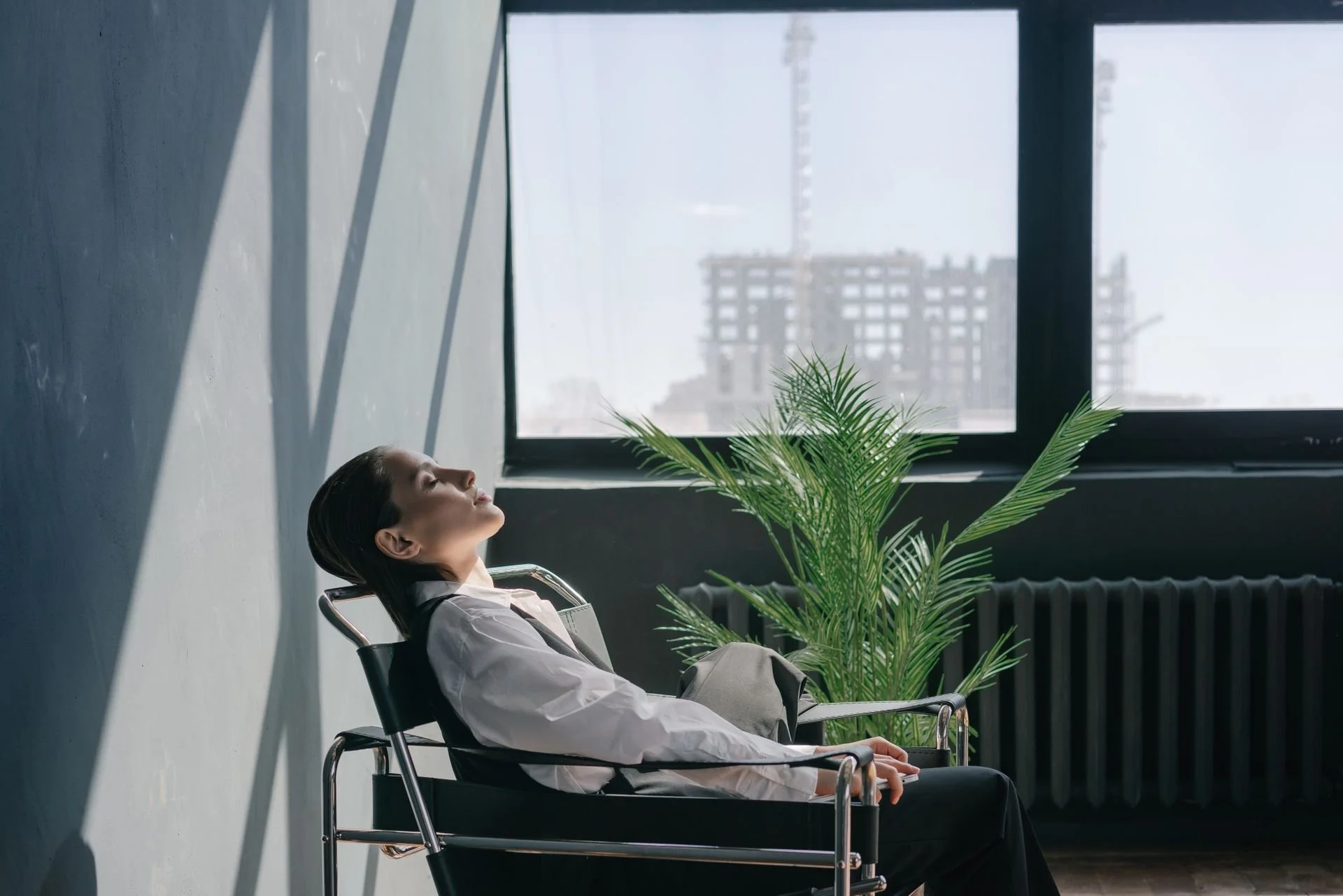
Sitting in the Power is one of the first practices many mediumship students are taught, often long before they give a sitting to anyone. It is practised in development circles, on residential courses and at home. Yet the instruction can be puzzling the first time you hear it.
What exactly are you supposed to do? Is it meditation? Should you visualise light, try to feel energy, or wait for a spirit to come close? How do you know whether you are doing it correctly?
The practice is simpler than many beginners expect, but its purpose deserves careful explanation. This guide explains what it means within the tradition, how it differs from meditation and from mediumship itself, offers a gentle step-by-step practice, works through the difficulties students commonly meet, and sets out honestly what research can and cannot say about it.
At The School of Mediumship
Sitting in the Power is a regular meditative practice, central to Spiritualist development, of sitting in stillness to strengthen awareness of one's own spirit and the power with which the medium works.
1. What Does “Sitting in the Power” Mean?
In Spiritualist teaching, power has a particular meaning. It does not refer to personal authority, control over others, or supernatural powers. It refers to the spiritual nature of the individual and to the greater spiritual presence or power understood within the tradition.
Teachers describe this in different ways. Some place the first emphasis on becoming aware of one's own spirit, sometimes called sitting in your own power. Others emphasise sitting in the presence or power of spirit. Course descriptions from established colleges reflect both: learning why sitting in the Power matters and how it helps discipline the mind and use one's own power1, and learning to step into the wider presence of spirit at the start of a sitting, as distinct from the particular communicator whose evidence comes later2.
Whatever the emphasis, the practice usually begins with stillness and an inward shift of attention. Rather than staying occupied with the day's thoughts and tasks, the student lets attention settle and becomes more aware of their own state of being. From there, the intention may widen towards a sense of spiritual presence, without trying to contact any particular person who has died. This is why Sitting in the Power is treated as a practice in its own right, not simply the opening minutes of a reading.
The purpose is not to generate a dramatic event. It is to become familiar with a quieter, more receptive way of attending.
2. Why Is It Important for Developing Mediums?
Students often begin with an understandable wish to experience something: to see a spirit, receive a name, or discover whether they have an ability. But evidential mediumship asks for much more than noticing an unexpected impression. A student must learn to observe carefully, distinguish perception from interpretation, communicate clearly, and stay composed when information is uncertain or not recognised. Sitting in the Power supports the foundations of that discipline in four ways:
3. Is Sitting in the Power the Same as Meditation?
Sitting in the Power is a form of meditative spiritual practice, but it has a particular intention. Meditation is a broad term: some forms focus on the breath; others on contemplation, compassion, visualisation, devotion or non-judgemental awareness. Sitting in the Power shares several features with these, particularly stillness, focused attention, and noticing thoughts without following every one. The difference lies mainly in its spiritual context. The student is not sitting only to relax or practise mindfulness, but to explore their understanding of themselves as a spiritual being and their relationship with the power of spirit.
Many readers in India will recognise similarities with dhyāna or other contemplative practices they already know. Those practices can be a helpful background, but Sitting in the Power has its own intention within mediumship development, and the two should not be assumed to be the same.
| Practice | Principal intention |
|---|---|
| General meditation | To cultivate attention, awareness, contemplation or another defined meditative aim |
| Sitting in the Power | To develop stillness and awareness of one's own spiritual nature and, within Spiritualist teaching, the presence of spirit |
| Attunement for mediumship | To prepare for, and explore, a possible connection with the spirit world |
| Evidential mediumship | To attempt communication involving information a sitter may recognise about a person who has died |
These practices are related and may overlap, but they are not identical. Many teachers use relaxation or meditation as preparation; others teach Sitting in the Power with very little guidance, simply encouraging students to settle and stay attentive. There is no single method used by every Spiritualist teacher.
4. How to Sit in the Power: A Gentle Step-by-Step Practice
The following is an introductory practice for anyone who wants to understand the basic principles. It is a starting point, not a universal method or a substitute for the guidance of an experienced teacher. For a beginner, five to ten minutes is enough.
- SettleBody and breath
- Be awareOf yourself, here
- IntendA gentle purpose
- RestOpen, quiet stillness
- ReturnFully to the room
Choose a quiet, comfortable place. Somewhere you will not be interrupted. A supportive chair is entirely suitable; you do not need to sit on the floor or adopt a special posture. Rest your feet on the floor and your hands naturally. Close your eyes if that is comfortable, or keep them softly open. Candles, crystals, music and incense are not required.
Let the body settle. Notice the support beneath you and your feet on the floor. Let unnecessary tension soften. Let your breathing continue naturally, with no need for unusually deep breaths or holding the breath. You are not trying to induce an extraordinary state, only to become settled and attentive.
Become aware of your own presence. Thoughts about work, family or the day will come. There is no need to argue with them or push them away; notice them, and let your attention return. Become aware of yourself simply sitting, and of the difference between thinking about your experience and quietly noticing that you are here. In the language of Spiritualist development, this may be the beginning of becoming more consciously aware of your own spirit.
Hold a gentle intention. When you feel settled, quietly acknowledge why you are sitting, perhaps in words like those below, or through a simple prayer if you follow a devotional tradition, or with no words at all. It is an intention, not a command that something must happen.
Let awareness become more open. Instead of concentrating hard on one thing, let attention rest more widely: sounds in the room, the rhythm of breathing, a sense of stillness. Within Spiritualist teaching, this may be understood as becoming receptive to the wider power or presence of spirit. You do not need to imagine energy expanding; if imagery helps you settle, use it gently, but do not treat an imagined image as communication.
Remain quiet, without seeking a message. This is the heart of the practice. You may feel calm, notice ordinary thoughts, changing sensations, or very little at all. Let it be what it is; if your attention wanders, return gently. Above all, do not begin asking for names, messages or signs. Sitting in the Power is not meant to become a private reading every time you practise.
Return to the room. Bring your attention back to the chair, the floor and the ordinary sounds around you. Open your eyes, move gently, stretch if comfortable, and take a moment before continuing your day. The aim is to finish feeling present, steady and comfortable.
Reflect briefly, without judging. Was it easy to settle? Was your attention restless? Could you stay present without trying to make something happen? A short, factual note helps you become familiar with your own experience over time. It should not become a collection of presumed spirit messages.
“I am sitting in stillness, allowing myself to become more aware of my own spiritual nature, and open to the presence of spirit.”
A simple ten-minute structure
These timings are suggestions, not rules. Five minutes may feel more comfortable at first; an experienced student may sit longer. The aim is a practice you can approach calmly and consistently. A sitting does not become more spiritually significant simply because it lasts longer.
5. What Should You Feel While Sitting in the Power?
There is no single sensation everyone should experience. Some people describe feeling peaceful, warm or quietly uplifted; others notice tingling, spaciousness or heightened attention; some feel very little, and one session can feel quite different from the next. None of these is a reliable measure of mediumistic ability. Sensations arise through posture, attention, expectation, emotion and ordinary bodily processes. Warmth does not establish that energy has entered the body, and colours or images behind closed eyes do not establish the presence of a communicator, especially when you are drowsy, since vivid imagery is common as people drift towards sleep3.
Within Spiritualist practice, people may attach spiritual meaning to certain experiences. The important thing for a developing student is not to turn every sensation into a conclusion. You can observe an experience without claiming to know its source.
What if nothing happens?Then you have still spent time practising quiet attention. A session without sensations, images or impressions is not a failed sitting. The belief that every practice must produce a spiritual event only creates pressure; regularity, patience and honest observation are far more useful.
6. Common Difficulties When Learning to Sit in the Power
7. Sitting in Your Own Power and Sitting in the Power of Spirit
Students often meet different explanations of the practice and wonder whether they are being taught contradictory methods. Two phrases are especially common:
Sitting in your own power
Emphasises awareness of your own spiritual nature: recognising yourself as more than the stream of everyday thoughts, and becoming familiar with your own sense of inner stillness and presence.
Sitting in the power of spirit
Emphasises awareness of a wider spiritual presence, described by teachers as attunement to the spirit world, the power of spirit, or a greater spiritual reality.
Some teachers treat these as successive stages within one sitting; others emphasise one, or use the terms interchangeably. A beginner need not force an experience of either. Understanding the intention matters more than reproducing someone else's description of what it should feel like. These terms belong to Spiritualist teaching; they do not mean particular energies or frequencies have been scientifically measured.
Is it the same as blending with spirit?
Not exactly. Many teachers describe mediumship as moving through attunement, blending and communication5. Blending generally refers to the perceived coming together of the medium's awareness with that of a spirit communicator, through which a student may become aware of that person's character or memories. Sitting in the Power may prepare for such work, but it does not involve actively seeking or sustaining a link with a particular communicator. Blending, linking, evidential development and private sittings each bring additional intentions, teaching and responsibilities. One practice supports another without being the same.
8. How Often, and Can You Practise Without a Teacher?
Many teachers encourage regular practice; some recommend sitting daily, others adapt to each student's circumstances. There is no scientifically established number of minutes or sessions that guarantees development. For beginners, five to ten minutes on several days a week is a manageable start. A student who sits for thirty minutes trying to force visions has not necessarily learned more than one who sits quietly for ten. Nor does one vivid experience mean a student has suddenly advanced.
Fine to explore on your own
- Short, gentle sittings to settle and become familiar with your own awareness
- Brief, factual notes afterwards
- Stopping whenever you are uncomfortable
Best learned with a teacher
- Telling quiet awareness from imagination or psychic impressions
- Blending, linking and attempting communication
- Working with sitters: feedback, consent, confidentiality and grief
A good teacher can also notice when a student is imposing expectations on an experience. Sitting quietly on your own is a valuable foundation, but it does not teach everything needed to give an ethical evidential sitting.
9. How Does Sitting in the Power Support Evidential Mediumship?
Evidential mediumship aims to bring forward specific, recognisable information about someone believed to be in the spirit world. The medium must notice an impression, understand it without immediately adding assumptions, and communicate it in a way the sitter can evaluate. Sitting in the Power does not itself demonstrate any of this. Its role is preparatory:
Sitting in the Power does not automatically produce this discernment. It can be part of a wider education in observing without imposing conclusions, explored further in our article What Counts as Evidence in Evidential Mediumship? The quality of evidential mediumship is judged by the information communicated and how the sitter recognises it, never by what the medium felt while preparing.
10. What Can Research Say About Sitting in the Power?
Sitting in the Power belongs to Spiritualist tradition, and its spiritual purposes should be understood in that context. There is no direct scientific research on the practice itself. Wider research on meditation offers some useful, careful points:
Some benefits, modest evidence. Reviews summarised by the US National Center for Complementary and Integrative Health suggest mindfulness-based approaches can help with anxiety, depression and stress, though many studies are of limited quality and long-term effects are less clear6.
Not comfortable for everyone. A review of 83 studies found that about 8% of participants experienced a negative effect, most often anxiety or low mood7. In a survey of 1,232 regular meditators, about a quarter reported a particularly unpleasant meditation-related experience at some point, more often among those on retreats or using certain intensive methods8.
Findings do not transfer automatically. Results from one form of meditation cannot be assumed to apply to another, and none of this research shows that Sitting in the Power increases access to spirit communicators, improves evidential accuracy, or alters any measurable “frequency”.
None of this prevents people from valuing the practice as part of their spiritual discipline. It means traditional explanations, personal reports and scientific findings should be kept distinct. Sitting in the Power is spiritual education and development, not a treatment for stress, emotional difficulty or any health condition. If you have a mental-health condition, or a practice repeatedly leaves you distressed, stop and speak to a qualified professional; meditation should never replace or delay appropriate care.
11. How We Approach Sitting in the Power at The School of Mediumship
At The School of Mediumship, established by Soul Consciousness Lab®, Sitting in the Power is introduced as part of the foundations of evidential training. Students need time to become familiar with their own awareness before they can evaluate impressions responsibly, so preparation, presence and stillness are taught alongside the practical disciplines of mediumship.
- In Level 1: on Evidential Mediumship Level 1, Dr. Rashhi Sharma and Prabhat Sharma guide students through foundational awareness practices, including Sitting in the Power, alongside supervised exercises.
- Its place: part of a wider structure that includes the difference between psychic and mediumistic information, partner practice, observation, sitter feedback and the ethics of communication.
- No set experience expected: one student finds stillness natural; another struggles with restlessness or expectation. Both are guided, and no one is expected to feel particular sensations.
- Why residential: six days in person let tutors observe each student and guide them across repeated practice, and notice when someone needs to pause, ground or rest.
- Continuing practice: graduates are encouraged to continue sitting in the power, awareness exercises and personal reflection after the course.
Sitting in the Power is not treated as a guarantee of spirit contact, and the programme does not guarantee mediumistic ability or readiness for professional practice. Its purpose is to help students learn the practice within its tradition, and continue their work with greater care.
Frequently Asked Questions
What is Sitting in the Power in mediumship?
Sitting in the Power is a meditative spiritual practice used in Spiritualist mediumship development. It involves sitting in stillness to become more aware of your own spirit and, within the tradition, of the wider presence or power of spirit. It is practised without trying to force communication from any particular person who has died.
How do I know if I am sitting in the power correctly?
No single sensation proves the practice is working. Sit comfortably, let your attention settle, hold a gentle intention without demanding an experience, and return fully to the room at the end. A teacher can offer further guidance.
How long should a beginner sit in the power?
Five to ten minutes is a manageable start, on several days a week. Adjust with comfort and experience. There is no validated duration that guarantees mediumistic development.
Do I need to visualise light or energy?
No. Some teachers use visualisation; others prefer stillness without imagery. It is not required, and imagined light or colours should not be treated as evidence of spirit presence.
Should I ask my spirit guides to come forward?
A simple intention or prayer may be part of your practice, depending on your beliefs and teaching tradition. But a foundational Sitting in the Power exercise does not require seeking a guide, a message or a named communicator. Work with guides can be taught separately.
Do I need to protect myself or “close down” afterwards?
Many teachers include a clear ending to every sitting, and that is wise. The final steps of this practice, returning attention to the room, moving gently and pausing before continuing your day, serve that purpose. There is no need to approach the practice with fear.
Can I sit in the power with other people?
Yes. It is practised alone and in development circles or group training. A group can offer shared structure and guidance, but being in a group does not establish that spirit communication has occurred.
Is Sitting in the Power the same as trance?
No. Trance mediumship involves particular approaches to altered states and spiritual communication. Sitting in the Power may be used as preparation in some traditions, but practising it does not mean you are entering trance.
Can Sitting in the Power make me a medium?
Many Spiritualist traditions regard it as an important foundation for development, but the practice alone cannot guarantee mediumistic ability. Evidential mediumship also involves communicating specific information, receiving sitter feedback and working ethically with others.
Is it safe if I have anxiety or a mental-health condition?
Meditative practices are not comfortable for everyone, and a minority of people experience anxiety or low mood during them. If you have a mental-health condition, talk to your doctor or therapist before starting, keep sittings short, and stop if you feel distressed. Sitting in the Power is not a treatment and should never replace professional care.
What if I feel nothing during practice?
That is common, and it is not failure. Continue with short, comfortable sittings without trying to manufacture sensations. The practice is not measured by dramatic experiences.
A Foundation Built Through Quiet Practice
Students are often drawn to mediumship by experiences that seemed extraordinary: a vivid dream, a sudden impression, a moment they understood as contact with the spirit world. Sitting in the Power offers a different starting point. It asks the student to become quiet, attentive and familiar with their own awareness before trying to interpret or communicate anything.
Some days the practice will feel peaceful. On others the mind will be busy, the body restless, or the experience entirely ordinary. None of these needs to become a spiritual achievement or a failure. For a developing medium, the patience the practice encourages matters: the ability to remain present, observe carefully and not force an interpretation supports the whole discipline of evidential work.
Sitting in the Power is not about proving that something extraordinary is happening. It is about learning to remain present without needing to make something happen.
About the authors
 Dr. Rashhi Sharma, PhD
Founder and Lead Trainer of The School of Mediumship. She studied mediumship with Suzanne Giesemann in the United States and in person at Arthur Findlay College and The College of Psychic Studies in the United Kingdom. Full profile
 Prabhat Sharma
Trainer at The School of Mediumship. He studied mediumship in person at Arthur Findlay College and The College of Psychic Studies in the United Kingdom, and co-teaches every day of Level 1. Full profile
Continue Exploring
- What Counts as Evidence?The difference between an impression, its interpretation and what a sitter recognises.Read the article →
- Can Mediumship Be Learned?Natural sensitivity, practice, discernment and the responsibilities of development.Read the article →
- Evidential Mediumship Level 1Six residential days near Bengaluru, including Sitting in the Power, supervised sittings and feedback.Explore Level 1 →
References
- Arthur Findlay College. Mediumship: Strengthening Our Connection with Spirit: course description.
- The College of Psychic Studies. The Connected Medium: workshop description.
- NHS. Hallucinations and hearing voices, including experiences when falling asleep or waking.
- Killingsworth, M. A. and Gilbert, D. T. (2010). A wandering mind is an unhappy mind. Science, 330(6006), 932. doi:10.1126/science.1192439
- The College of Psychic Studies. Harness the ABCs of Mediumship: Attune, Blend, Communicate.
- National Center for Complementary and Integrative Health (US). Meditation and Mindfulness: Effectiveness and Safety.
- Farias, M. et al. (2020). Adverse events in meditation practices and meditation-based therapies: a systematic review. Acta Psychiatrica Scandinavica, 142(5), 374–393.
- Schlosser, M. et al. (2019). Unpleasant meditation-related experiences in regular meditators: prevalence, predictors, and conceptual considerations. PLOS ONE, 14(5), e0216643. doi:10.1371/journal.pone.0216643
Course descriptions are cited to show how established colleges describe the practice; they do not imply endorsement of the School. Meditation research is background, not direct research on Sitting in the Power.