Choosing a mediumship course is not always straightforward. There is no single body that regulates mediumship teaching around the world, and courses vary far more than their descriptions suggest.
You may find a weekend workshop, a residential programme, an online development circle or a course that offers a certificate at the end. Some focus on psychic awareness, others on evidential mediumship, trance, healing or public demonstration. Teaching methods, expectations and the amount of individual attention can differ considerably.
A well-presented website, a recognisable name or an impressive list of topics may catch your attention. But none of these, on its own, tells you how the training will actually be conducted, or whether it suits your current experience.
The best mediumship course is not necessarily the most expensive, the longest or the one taught by the most recognisable name. It is the one whose purpose, teaching, standards and support are right for the student.
Here are ten questions worth asking any mediumship school or teacher, including us. For each, we explain why it matters, suggest what to ask, and describe what a good answer tends to look like. A side-by-side checklist and common questions follow at the end.
1. What Kind of Mediumship Will I Actually Be Learning?
The word mediumship covers several distinct areas of practice. Evidential mediumship focuses on communicating information attributed to someone believed to be in the spirit world, offering details a sitter may recognise. Trance mediumship explores altered states of awareness within a particular tradition. Other areas include physical mediumship, spiritual healing, inspirational communication, spirit art and platform demonstration. Our guide to the types of mediumship explains how they differ.
These disciplines are related, but they are not interchangeable. A programme described simply as “mediumship training” may be mostly meditation and psychic awareness. Another may focus on private evidential sittings or platform work. Neither is necessarily unsuitable, but they serve different purposes.
If a course covers several disciplines, find out whether each receives meaningful teaching time or is introduced only briefly.
Ask the teacher: Which forms of mediumship are taught, and which are outside the scope of this course?
A good signa clear description of what you will practise each day, and what the course does not cover.
Be cautious ifthe course promises to develop “all your gifts” at once, in a short time.
2. Who Teaches, and How Do They Continue Their Own Development?
Start with the people, not the brochure. Ask who will be in the room (or on the screen) each day, and whether the names on the website are the ones who will actually teach you.
Then look beyond the biography. Where did they study mediumship, and for how long? Which forms have they developed? How much experience do they have in the particular discipline they intend to teach? Look at their published work, interviews or demonstrations and, where possible, speak with previous students.
Being an experienced practitioner and being an effective teacher are not the same thing. Teaching requires the ability to explain a process, observe individual difficulties, give useful feedback and adapt exercises to different levels. It also helps to know whether the teacher continues their own study and practice, because mediumship education does not become complete after a certain number of courses.
Two distinctions are worth remembering. First, studying at a respected college is not the same as being accredited or endorsed by it; educational history and institutional accreditation are different claims. Second, some letters after a name have specific meanings. In the United Kingdom, for example, the Spiritualists' National Union assesses tutors separately for particular disciplines and for teaching, shown as awards such as CSNU2. Ask what any title means rather than assuming.
Ask the teacher: What is your experience in this particular discipline, how do you approach students at different levels, and will you teach the whole course yourself?
A good signnamed teachers with a specific, checkable history of study and practice, who teach throughout.
Be cautious ifthe background is vague, a well-known name is advertised but someone else teaches, or a college's name is used to imply endorsement.
3. Is This Course Suitable for My Current Level?
A beginner may be deeply interested in mediumship without ever having sat in a development circle. Another student may have years of psychic awareness but little practice in evidential communication. A third may already give private sittings and want more clarity or consistency. These students do not need the same training.
Look at the stated level and entry requirements. Does beginner mean no previous experience is needed? Does intermediate require a demonstrated ability to give evidential information? If a course is for mixed levels, how will the teaching accommodate the differences? Some colleges place students in groups by level at the start of a course1; ask how your course does it.
Beginners should not have to prove a spiritual ability before they start. But an advanced course may leave a genuine beginner lost, and an introductory course may feel too basic for an experienced student.
Ask the teacher: What should I already know or be able to do before joining, and how will you decide whether this course is right for me?
A good signa conversation before enrolment that helps you decide, even if the answer is “not yet” or “not this course”.
Be cautious ifevery enquiry is simply encouraged to enrol, whatever your experience.
4. How Much of the Course Involves Actual Practice?
There is a difference between hearing someone explain mediumship and learning to practise it. Talks, demonstrations and discussion have value, but development also needs opportunities to work with impressions, communicate information, receive feedback and reflect on what happened.
Ask how the teaching time is divided. Will you practise with partners and in small groups? Will a tutor observe your work? Will you practise one to one and in front of the group? Are students helped to understand what happened in an exercise, including when the information was not recognised?
Quality matters as much as quantity. An exercise becomes useful when you understand its purpose and receive guidance. A student may, for example, receive an impression they interpret as a communicator's memory, then realise in reflection that they added an assumption to the original information. Noticing that is part of development.
Ask the teacher: How many supervised practice opportunities will I have, and what feedback will I receive on each?
A good signa stated number of supervised practice sessions, built into every day, with feedback from the teachers themselves.
Be cautious ifthe timetable is mostly lectures, guided journeys or channelled talks, with practice left for “later”.
5. How Is Evidential Information Taught and Evaluated?
This question matters most when choosing an evidential mediumship course. Within the Spiritualist tradition, evidential mediumship seeks information associated with a spirit communicator that the sitter may recognise. But what does the teacher consider meaningful evidence?
Imagine a student senses an older man and describes him as kind. That may be a genuine impression, but it is not particularly identifying. Information about a person's distinctive habits, relationships, personality or specific memories offers a clearer basis for recognition, depending on its accuracy and context. Comforting general messages (“he is at peace”, “she is proud of you”) are not, by themselves, evidence.
Good training also teaches three distinctions:
- Perception and interpretation: describing what was perceived before deciding what it means.
- Psychic and mediumistic information: within the tradition, information about the living sitter is psychic, and should not be presented as evidence of a communicator.
- Offered and supplied information: details given spontaneously, as opposed to details drawn out through questions or the sitter's reactions.
A responsible teacher does not treat every impression as correct or explain away every mismatch. And evidence in a sitting means recognisable information within the practice. It should not be confused with scientific proof that communication with the deceased has occurred.
Ask the teacher: How do you teach students to distinguish impressions, interpretation and information the sitter genuinely recognises?
A good signa clear definition of evidence, “evidence before message”, and openness about what evidence can and cannot establish.
Be cautious ifgeneral reassurance is treated as evidence, or every statement is counted as a “hit”.
6. What Ethical Standards Are Taught?
Mediumship often involves people who are bereaved, uncertain or distressed. For that reason, ethical teaching is not optional. A published code of ethics for mediums, drafted with the participation of practising mediums, sets out many of the same responsibilities3.
Ask whether the programme covers confidentiality, consent, appropriate questioning, grief sensitivity and professional boundaries. Does the teacher explain why it is wrong to guarantee contact with a particular person? Are students taught to avoid predictions or instructions that take authority over someone's decisions? Is there guidance on when a sitting is not appropriate?
There should also be honesty about what mediumship cannot offer. A sitting is not a substitute for counselling, medical treatment or mental-health care, and emotional healing or closure cannot be guaranteed. A good course also looks after its own students: pacing intense exercises, teaching grounding, and knowing what to do if someone becomes distressed. Our Ethics & Safety page sets out how we approach this.
Ask the teacher: How are ethics, confidentiality, grief sensitivity and the limits of mediumship taught, and how are they assessed?
A good signethics taught and practised throughout the course, not added at the end.
Be cautious ifcompassion is described warmly but never taught, or students practise on grieving strangers early on.
7. What Is the Group Size, and How Much Individual Guidance Will I Receive?
A large event can be valuable for inspiration and for seeing different teachers at work. A smaller group gives a tutor more chances to observe each student. Neither is automatically better; what matters is whether the arrangement supports what the course promises to teach.
Ask how many students will attend and how many tutors will be present. If students split into practice groups, who supervises them? Will the tutor notice students who are struggling, or those who need more challenge? A simple calculation helps: the hours of supervised practice, divided by the number of students, shows how much individual attention is realistically possible.
Consider the atmosphere too. You should be able to take part without feeling pressured to disclose deeply personal experiences or produce dramatic results.
Ask the teacher: How large is the group, and what opportunities will I have for individual observation and feedback?
A good signa stated maximum number of students, and a description of how individual observation actually works.
Be cautious ifno maximum is given, or the course is simply called “personalised” without explanation.
8. What Does the Certificate Actually Mean?
Certificates can be useful records of study, but their meaning varies. A certificate may confirm attendance, participation, completion of defined requirements, or successful assessment against particular standards. These are different achievements.
Ask what you must do to receive it. Does everyone who attends receive one? Are there assignments, practical observations or assessments? What happens if you attend but do not yet meet the requirements? Who issues it, and has any external organisation independently recognised the programme?
There is no universal accreditation for mediums. A certificate from a private training provider is not a regulated professional qualification, a licence to practise, or accreditation from a college where the teacher studied. Completing an introductory course does not mean someone is ready to give independent professional sittings.
Ask the teacher: What are the requirements for the certificate, who issues it, and what does it entitle me to claim?
A good signa certificate that states exactly what it records, and what it does not.
Be cautious ifa short course awards a professional-sounding title such as “certified medium”, or suggests you can begin charging for sittings straight away.
9. What Is the Full Cost, and What Happens After the Course?
Fees deserve careful thought, especially when travel and accommodation are involved. Begin with the published fee, then ask what it includes. Are accommodation and meals included or charged separately? Are there extra charges for materials, assessment, certificates or follow-up sessions? When is the balance due after a deposit? What happens if you cannot attend, need to reschedule or leave early? Read the actual booking terms rather than relying on a general assurance.
If you are travelling from another country, also clarify the teaching language, accommodation, local transport and any practical arrangements that could affect your participation.
Then ask about afterwards. Mediumship development continues for years; one course is a foundation, not an ending. Will you receive exercises for independent practice? Can you ask questions after the programme? Is there a next level, or an ongoing development circle, and is it included or charged separately? Good training need not include indefinite support, but it should describe honestly what continues and what does not.
Ask the teacher: What is the total cost, what are the cancellation terms, and what support is available after the programme?
A good signwritten terms, a clear breakdown of what is included, and a defined pathway after the course.
Be cautious ifcosts are unclear until after you pay, or each course leads only to a more expensive “advanced” version with little new content.
10. Does the Course Encourage Independent Thinking and Realistic Expectations?
Perhaps the most revealing question concerns the culture of the teaching. Does the teacher welcome thoughtful questions? Can students say they did not understand an exercise, or did not recognise information, without being made to feel inadequate? Are different paces of development treated with respect?
A healthy learning environment does not depend on students accepting every claim made by the teacher. Students should be encouraged to observe carefully, test their understanding and separate personal belief from what they have actually experienced. They should be able to discuss uncertainty openly.
People develop at different paces, and no responsible teacher can promise that a particular ability will develop within a fixed period. Be cautious when a programme guarantees contact with spirit, promises rapid professional mastery, or suggests that questioning the teaching is a sign of a student's spiritual limitations.
Ask the teacher: What happens when a student questions an explanation, struggles with an exercise or does not get the expected result?
A good signclear statements of what is taught, what is assessed and what cannot be guaranteed, and a teacher who welcomes questions.
Be cautious ifresults are guaranteed, abilities are “activated” in a set time, or doubt is treated as a personal failing.
Before You Enrol: The Checklist
Use this to compare courses, wherever they are taught. A course does not need to be perfect on every line, but several cautions together deserve to be taken seriously. If several answers remain unclear, ask for a detailed conversation before you commit; it is reasonable to take time over an important educational decision.
| Question | Good sign | Be cautious if |
|---|---|---|
| 1. Kind of mediumship | Clear scope of what is practised | “All your gifts” at once |
| 2. Who teaches | Named, checkable teachers who teach throughout | Vague background; implied endorsement |
| 3. Your level | An honest pre-enrolment conversation | Everyone encouraged to enrol |
| 4. Practice | Stated number of supervised sessions, daily | Mostly lectures and meditations |
| 5. Evidence | Clear definition; evidence before message | Reassurance treated as evidence |
| 6. Ethics | Taught and practised throughout | Mentioned, never taught |
| 7. Group size | A stated, small maximum | No maximum; “personalised” unexplained |
| 8. Certificate | States what it records and what it doesn't | “Certified medium” after a short course |
| 9. Cost and after | Written terms; a clear pathway | Hidden costs; only upsells |
| 10. Culture | Questions welcome; no guarantees | Guaranteed results; doubt discouraged |
Are Residential Courses Better Than Online Mediumship Training?
Not necessarily. Each format has strengths and limits.
Online courses make experienced teachers accessible to people who cannot travel, and they can offer regular practice, demonstrations and discussion alongside everyday life. Residential programmes bring students and tutors together for sustained periods, which can allow more continuous observation, partner practice and informal discussion throughout the day. Weekly classes give time to absorb what has been learned between sessions.
A residential course is not automatically better because it involves travel, and an online course is not automatically superficial because it is delivered remotely. Apply the same ten questions to every format, and look especially at how much observed practice and individual feedback the format genuinely allows. Consider your learning style, your available time, your budget, and whether you would benefit from direct, in-person guidance.
Why Choosing the Right Teacher Matters
Mediumship development can bring students into contact with unfamiliar experiences, personal questions and beliefs they are still exploring. A teacher's responsibility is not to supply every answer or persuade students to accept a particular interpretation. It is to explain the practice clearly, provide suitable exercises, give considered feedback, and keep standards that respect both students and the sitters they will one day work with.
Students have responsibilities too: to read the programme information carefully, understand the fees and conditions, take part honestly and stay willing to reflect on their own work. A good educational relationship depends on clarity from both sides, which is why an initial conversation is so valuable. It lets the student understand the teaching, and the school explain its expectations and limits.
How Our Level 1 Answers These Questions
We wrote these questions to be useful whichever course you choose. In fairness, here is how our own foundation programme, Evidential Mediumship Level 1, answers them:
- What you learn: evidential mediumship within the Spiritualist tradition, including the distinction between psychic and mediumistic information. Practice includes working in front of the group; trance, physical mediumship and other specialist pathways are outside its scope.
- Who teaches: Dr. Rashhi Sharma and Prabhat Sharma teach every day, in person. Both studied mediumship in person at Arthur Findlay College and The College of Psychic Studies; neither college endorses or accredits the School.
- Level: open to beginners, with a clarity conversation before enrolment.
- Practice: six residential days and 70 total training hours in Bengaluru, with 20 to 25 supervised practice sessions per student, one to one and in front of the group.
- Group size: a maximum of 12 students.
- Ethics: consent, confidentiality, grief sensitivity and the limits of mediumship are taught throughout.
- Certificate: a Certificate of Completion, awarded on participation, assignments, observed practice, ethical understanding and conduct. It is not a licence to practise or the title “certified medium”.
- Cost and terms: the fee, what it includes, and the booking terms are published on the programme page before you apply.
We would rather someone choose training they genuinely understand than enrol because they have been persuaded by a promise.
Frequently Asked Questions
Do I need psychic experiences before taking a mediumship course?
No. Many good courses are open to complete beginners. What matters more is genuine interest, willingness to practise and openness to honest feedback. Check that the course is designed for your level.
Can mediumship be learned online?
Parts of it can, particularly theory, meditation and some practice. What online formats find harder is close observation of each student's practice. Judge any format by how much supervised practice and individual feedback it genuinely allows.
Is a mediumship certificate a professional qualification?
Usually not. There is no universal accreditation for mediums. Most certificates record completion of a specific programme with a specific provider. Ask exactly what yours records, and what it does not.
How long does a good mediumship course last?
There is no single right length. Weekend workshops can introduce ideas; residential programmes of several days offer concentrated practice; weekly circles support long-term development. Development itself continues for years, so look for a course that is honest about this.
What are the warning signs of a poor mediumship course?
Guaranteed results, promises to “activate” abilities in a set time, vague teacher backgrounds, no stated group size, professional titles after a short course, unclear costs, and discouragement of questions.
How do I know if a mediumship teacher is genuine?
Look for a specific, checkable history of study and practice, teaching experience at your level, honest answers to the ten questions above, and former students you can speak to. A good teacher welcomes questions about their background.
Final Thoughts
Choosing a mediumship course is about more than finding a teacher whose work interests you. It is about understanding what you will study, how you will practise, who will guide you and what you can reasonably expect.
An impressive course description can be a starting point. A clear curriculum, honest answers, suitable learning conditions and responsible teaching are much stronger foundations for a decision.
Ask the questions. Read the terms. Speak with the people involved. And remember that meaningful development is not a race to reach a particular level quickly. The aim is to learn with greater understanding, clarity and responsibility.
About the authors
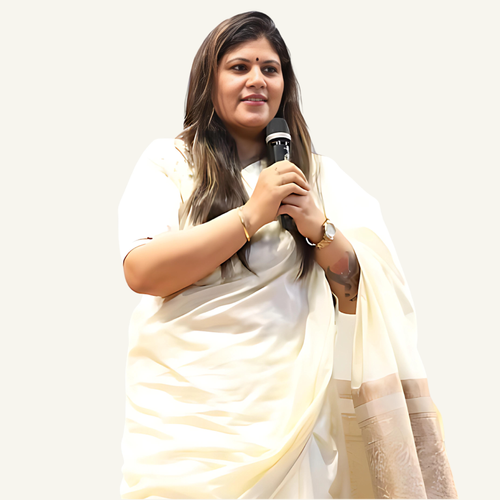 Dr. Rashhi Sharma, PhD
Founder and Lead Trainer of The School of Mediumship. She studied mediumship with Suzanne Giesemann in the United States and in person at Arthur Findlay College and The College of Psychic Studies in the United Kingdom. Full profile
 Prabhat Sharma
Trainer at The School of Mediumship. He studied mediumship in person at Arthur Findlay College and The College of Psychic Studies in the United Kingdom, and co-teaches every day of Level 1. Full profile
Continue Exploring
- Can Mediumship Be Learned?Natural sensitivity, spiritual experiences and the role of structured development.Read the article →
- Evidential Mediumship ExplainedWhy recognisable information, interpretation and sitter feedback deserve careful attention.Read the guide →
- Evidential Mediumship Level 1Curriculum, faculty, residential format, requirements and admissions.Explore Level 1 →
References and further reading
- Arthur Findlay College. Our Courses: course types, residential and online formats, and beginner, intermediate, advanced and mixed-level learning.
- Spiritualists' National Union. Spiritualism & Mediumship Courses and Certificates: educational pathways, CSNU and DSNU awards, and assessment.
- Zemel, S. K. & Wahbeh, H. (2025). Code of ethics for mediums and trance channelers. EXPLORE, 21(3), 103159. Institute of Noetic Sciences.