Interest in mediumship is growing among people in India who want to understand spiritual experiences, develop their awareness, or study evidential communication in a structured setting. Yet finding the right training raises questions that a course advertisement rarely answers.
What is actually taught in a mediumship programme? Is it different from psychic development, channelling or other spiritual practices? Is there supervised practice? Will the teaching be in English, Hindi or another language? What does the certificate mean? And if you are travelling to Bengaluru or another Indian city, what should you know before committing?
These questions matter just as much for international students considering training in India. Mediumship workshops and courses are offered in India by a range of independent teachers and organisations, online and in person, and they vary widely in what they teach and how.
The most useful way to evaluate a mediumship course is to look beyond its title, and examine the discipline being taught, the experience of its teachers, the quality of practical instruction and the standards students are expected to follow.
This guide covers those questions for India specifically. For the general questions to ask of any course, anywhere in the world, see our companion guide, How to Choose a Mediumship Course: 10 Questions to Ask Before You Enrol.
What Kind of Mediumship Training Is Available in India?
The term mediumship training is used for very different programmes. Some workshops introduce psychic awareness, intuition, meditation or working with spirit guides. Others explore channelling, automatic writing or other forms of spiritual communication. Some are described as mediumship practitioner courses.
These approaches may share ideas, but they do not necessarily teach the same discipline. A course that develops intuition may be valuable for personal awareness without providing the practical training that evidential mediumship requires. Before comparing courses, it helps to know precisely what you want to learn.
Evidential mediumship
Within the Spiritualist tradition, communication attributed to someone believed to be in the spirit world. The medium offers information the sitter may recognise (personality, relationships, memories, habits) to help identify the communicator, rather than general reassurance. Read more.
Psychic development
Impressions concerning a living person and their circumstances. Some programmes teach it alongside mediumship; the two are related but should not be treated as the same thing.
Trance and specialist practices
Trance, physical mediumship, spirit art, inspirational speaking and spiritual healing each need their own teaching and boundaries. A beginner course cannot cover them all in depth. See types of mediumship.
Ask first: What will I actually be learning, and what will I practise during the course?
Does India Have a Tradition of Mediumship?
India has a long and diverse history of spiritual inquiry into consciousness, the soul, death, ancestors and the relationship between the seen and unseen. Many families keep ancestral rites that remember those who have died across generations. In coastal Karnataka, the ritual tradition of Bhuta Kola involves a performer, a patri, who is understood to embody a guardian spirit and speak with the community4; Kerala's Theyyam holds a similar place. These are sacred, living traditions with their own lineages, and they deserve respect on their own terms.
Modern evidential mediumship has a more specific history and vocabulary. It developed within Spiritualism in nineteenth-century America and Britain, and uses concepts such as the spirit communicator, the sitter, recognisable evidence, private sittings and platform demonstration. India has a long connection with that period too: the Theosophical Society, founded in New York in 1875, established its centre at Adyar, near present-day Chennai, in 18825. Its co-founder, Helena Blavatsky, argued that communicating with the dead was not the highest purpose of psychic ability, a reminder that questions of discernment are as old as the movement itself.
A responsible teacher should be able to say which tradition informs their work, rather than combining spiritual systems without distinguishing their origins or purposes. This matters in India, where many students already have experience in meditation, yoga, healing, shamanic practice or ritual. That experience may shape your interest and understanding, but it does not by itself establish competence in evidential communication.
Evidential mediumship does not replace or compete with India's traditions. It is a particular discipline, and a good course says clearly that it is teaching that discipline.
Your Options for Mediumship Training
Students in India usually choose between four routes. None is right for everyone, and many serious students combine them over time.
| Route | Strengths | Limits to consider |
|---|---|---|
| Online, with international teachers | Access to experienced teachers; study from home; often lower cost | Time zones; harder for teachers to observe you closely; practice partners vary |
| Residential study in the UK | Long-established colleges and tutors; immersion; courses at several levels1 | Fees in pounds, flights and a UK visitor visa; time away from work and family |
| Local workshops and circles | Close to home; community; flexible | Discipline, quality and teacher backgrounds vary widely and can be hard to check |
| Residential programme in India | In-person observation; no long-haul travel; costs in rupees; cultural context understood | Check the discipline, teachers, daily structure and terms carefully |
Whichever route you choose, what matters is that each step offers observed practice and honest feedback, not only inspiration. If you are weighing a course in the UK, note that Indian citizens generally need a UK visitor visa to attend a short course there; check the official guidance and allow time before you book8.
What Should a Good Evidential Mediumship Course Teach?
A course advertised as practical evidential mediumship training should offer more than an introduction to spiritual ideas. Its curriculum should explain how students will develop awareness, practise communicating information and learn to evaluate what happens. Five elements deserve particular attention.
Understanding spiritual awareness
Students need space to become familiar with their impressions, which may arise as inner images, words, feelings, sensations or a sense of knowing. The aim is not to treat every impression as spirit communication, but to notice how impressions arise and how quickly assumptions become part of an interpretation.
Distinguishing psychic and mediumistic information
A student may describe something meaningful about the sitter's present life without establishing anything about a deceased communicator. Because evidential mediumship seeks information associated with the communicator, a course should help students understand what kind of information they are offering, and avoid overstating its source.
Developing recognisable evidence
Suppose a student senses that a communicator enjoyed music. That may be a starting impression, but it is not particularly distinctive. Further information about the person's characteristic behaviour, relationships or memories may help the sitter assess whether the communication resembles someone they recognise. Students should also learn to acknowledge plainly when information is incorrect, unclear or not recognised.
Practising the structure of a sitting
Working with another person involves more than receiving impressions. Students should learn how a private sitting begins, how information is shared, how feedback is received and how a sitting is brought to a respectful close, with consent, confidentiality, sensitivity to grief and professional boundaries built in.
Observation and feedback
A teacher can help students see when they moved from an original impression into interpretation, asked a leading question or became attached to an outcome. Students should learn from both recognised and unrecognised information. No course can guarantee that a particular student will demonstrate evidential mediumship; the purpose of training is to provide a responsible environment for learning, practice and assessment.
How Important Is a Teacher's International Training?
Students in India often look for teachers who have studied at international mediumship colleges. International study can contribute meaningfully to a teacher's development, particularly when it involves sustained practice and learning with experienced tutors.
But the name of a college should not be the only basis for choosing. Ask what the teacher studied, how it relates to what they now teach, and whether they continue developing their own practice. A teacher may have attended many courses but offer little individual instruction; another may have strong teaching skills and a clearly structured curriculum. Ideally, the two go together.
There is also a difference between studying at an institution and being accredited or endorsed by it. Someone who has attended Arthur Findlay College may truthfully describe their studies there; that does not mean their own programme is accredited or endorsed by the College. Expect accurate descriptions of training, without inflated claims.
Ask: Where and how did you train, how does it relate to this course, and will you teach the whole course yourself?
Mediumship Certificates in India: What Does Recognition Mean?
This is one of the most important questions to settle before enrolling. The word certification is used very differently by different providers. A certificate may acknowledge attendance, participation, completion of a programme, or achievement against an assessment framework. These are not interchangeable.
There is no government, university or regulatory recognition for mediumship certificates in India, just as there is no universal accreditation for mediums elsewhere. A school's own Certificate of Completion documents that a student met that programme's requirements. It does not establish that the person is a professionally qualified medium, that their ability has been scientifically verified, or that a regulator or external body recognises it.
Before paying, ask:
- Who issues the certificate?
- Is it based on attendance alone, or on defined completion requirements?
- Are practical work and ethical conduct assessed?
- What happens if a student does not meet the requirements?
- Is any external recognition claimed, and can it be independently checked?
- Does the certificate confer any professional or legal status?
A private certificate can still represent meaningful study and achievement. What matters is that its purpose and limits are described accurately. Be cautious of claims such as “government-recognised diploma”, “internationally accredited”, “licensed medium” or automatic readiness to give professional sittings.
Residential or Online Training, and Why Group Size Matters
Both formats can offer valuable learning. Online training lets you study with teachers across the world without the cost of travel, and suits introductory learning, ongoing circles, discussion and regular practice. Residential training brings students and teachers together for sustained periods; in a small group, teachers can follow each student's work across several sessions and return to exercises after feedback.
But residential training is not better simply because it is in person, and a carefully organised online programme may offer more than a poorly structured residential workshop. The format should serve the learning, not become the main claim of quality.
Group size matters for the same reason. Ask how many teachers are present, whether practice is supervised, and how individual feedback is organised. A small group with little practical instruction offers less than its description suggests. Ask for the daily structure: how much time is teaching, how much is practice, whether there are independent assignments, and whether you will work with different partners.
Ask, too, what the stated number of hours includes. Does it refer to classroom teaching alone, or does it also include assignments and independent practice? A transparent programme distinguishes these clearly.
What Language Is Mediumship Training Taught In?
India is multilingual, and students may be most comfortable in Hindi, English or one of many regional languages. A course taught in English can bring together students from different states and other countries. But understanding spoken English in a classroom is not the same as feeling comfortable describing subtle impressions or personal experiences in it, and in evidential mediumship, clarity of communication is central to the work.
Check the actual language of instruction, of practice sittings and of written materials and assessments. If you are more comfortable in Hindi or another language, ask whether bilingual support is available, and do not assume a teacher can translate a whole course simply because they speak more than one language. The aim is not to suggest that mediumship belongs to one language, but to make sure you can take part fully.
Ask: What language is used for teaching, practice sittings and written materials?
How Much Does Mediumship Training in India Cost?
There is no standard fee. Courses differ in duration, format, teacher involvement, practical requirements, group size and accommodation, so an online introductory workshop and an intensive residential programme with two teachers should not be compared on price alone. The useful question is what the full fee covers.
If a course costs more than a shorter alternative, ask what additional teaching or practice it provides. A higher price does not automatically mean better instruction, and a lower price may mean a narrower scope or less individual feedback. Clear written information is more useful than assumptions in either direction.
Is Mediumship Training in India Suitable for Beginners?
It depends on the programme. Some introductory courses accept students with no previous experience; others require earlier circle work or a demonstrated ability to give evidential information. You do not need childhood experiences of spirit communication to begin (see Can Mediumship Be Learned?). Interest, willingness to practise, openness to feedback and a thoughtful approach are the real starting points.
Beginners should not assume every programme is designed for them. Ask whether a course is for beginners, intermediate students or mixed levels, and consider the expectations around emotional maturity, confidentiality, working with partners and personal reflection.
Grief, ethics and emotional responsibility
Students may one day practise with sitters who are grieving a parent, partner or friend, and a medium's words can carry great weight even when the information is uncertain. Students should learn that a sitter has the right to recognise, question or reject information; that no one should be persuaded an unrecognised detail “must” be right; and that contact with a particular person can never be promised.
Consent, confidentiality, appropriate questioning and the boundary between mediumship and professional care belong in every course. A sitting is not a substitute for bereavement counselling, psychological treatment or medical care, and a course should not promise therapeutic outcomes. Enthusiasm and sincerity are valuable, but they do not remove the need for careful professional boundaries. Our Ethics & Safety page sets out our approach.
Warning Signs
Some offers circulating in India sit far outside responsible mediumship education. Be cautious of any course or practitioner that:
- Promises guaranteed contact with a particular person who has died
- Offers to remove “black magic”, curses or dosha for a fee, or to perform vashikaran on someone
- Claims to cure illness or solve financial, marital or legal problems
- Asks for repeated payments for rituals, “protection” or “energy clearing”
- Awards a professional title, such as “certified medium”, after a short course, or claims government recognition
- Discourages questions, medical care or advice from family
- Cannot tell you clearly where its teachers trained, or what the fee includes
Mediumship and the law in India
Two states have laws aimed at exploitative superstitious practices. Maharashtra passed its law in 2013. Karnataka's Prevention and Eradication of Inhuman Evil Practices and Black Magic Act, 2017 came into force in January 2020, banning a list of harmful practices, including vashikaran, while exempting religious worship and astrological advice2,3.
These laws target practices that harm, exploit or deceive. Education in evidential mediumship, taught openly, without promises of cures, control over others or guaranteed results, is a very different activity. The principles that keep a course within the law are the same ones that make it ethical: honesty, consent, no exploitation and no false promises. This is general information, not legal advice; for a specific concern, consult a lawyer.
Family, Faith and Privacy
For many Indian students, the hardest questions are not about the course at all, but about how family will respond, whether the practice conflicts with their faith, and who will know.
- Faith: evidential mediumship does not ask you to give up your religion or adopt a new one. Students from many backgrounds study it. A good course explains the tradition it teaches and leaves your beliefs to you.
- Family: it can help to share accurate information, such as the course's published scope, ethics and terms, rather than relying on images from films or television.
- Privacy: ask how your personal information, and anything shared in class, is kept confidential. Mediumship can still carry stigma in some settings, and a responsible school takes that seriously.
Travelling to Bengaluru for Mediumship Training
Bengaluru, widely known as Bangalore, is one of India's major cities and a destination for professional education and specialist programmes, with direct flights from most Indian cities and international connections through Kempegowda International Airport. If you are considering a residential course there, settle the practical details before booking travel.
Confirm the exact venue
A course advertised as being in Bengaluru may be held outside the city. Ask for the full venue address and guidance on reaching it from the airport or railway station; travel times vary with route and traffic.
Understand what “residential” means
Some programmes call themselves residential when accommodation is merely available. Others require every participant to stay at the venue, so that morning, evening and independent practice form part of the learning. Ask whether accommodation is compulsory, whether shared and single rooms are offered, how meals are managed, and whether the residential cost is included in the advertised fee.
Check the complete schedule
Confirm the starting and finishing times, not just the dates. You may need to arrive the day before or travel home the day after, especially when flights, transfers and travel fatigue are involved.
Accessibility and dietary needs
If you have mobility, accessibility or dietary requirements (including vegetarian, Jain or other diets), raise them before confirming your place so the venue can tell you realistically what it provides. Ask, too, how the group is supervised, so every student, including women travelling alone, feels comfortable.
If you are travelling from outside India
Check the visa and entry requirements for your nationality and the exact purpose of your visit before buying non-refundable travel. India offers several visa and e-visa categories, and whether a particular one suits a workshop or training programme depends on its rules. The official e-Visa portal, for example, sets conditions on short courses, including whether a course is formal or structured and whether it issues a certificate7. Do not assume a tourist visa is appropriate for a certificate-bearing course; read the official guidance or ask your nearest Indian mission. Rules can change, so verify them for your own circumstances.
Mediumship Training at The School of Mediumship, Bengaluru
The School of Mediumship was established by Soul Consciousness Lab® as a dedicated institution for mediumship education. Its founding programme, Evidential Mediumship Level 1, is built around the foundations of evidential communication, practical development, the sitter's role, recognisable information and ethical responsibility. These are the same questions this guide asks of any course:
- Discipline: evidential mediumship within the Spiritualist tradition, clearly scoped. No healing rituals, protection work or predictions.
- Teachers: Dr. Rashhi Sharma and Prabhat Sharma, who studied mediumship in person in the United Kingdom, including at Arthur Findlay College and The College of Psychic Studies. Their studies inform their teaching; neither college accredits or endorses the School.
- Format: six residential days near Bengaluru, a maximum of twelve students, and 20 to 25 supervised practice sessions per student. Every student stays at the venue, with five nights' accommodation and meals, because practice continues beyond classroom hours.
- Hours: 70 total learning hours, including teaching, discussion, supervised practice and required independent assignments. This is not a claim of 70 hours of teacher contact.
- Language: all teaching, discussion and practice in English. Students from outside India are welcome.
- Beginners: no previous mediumship course is required, and every applicant has a clarity conversation about readiness and expectations before enrolment.
- Certificate: a Certificate of Completion for students who meet the attendance, assignment, practical participation and conduct requirements. It is not a regulated professional qualification, a licence to practise, or a guarantee of mediumistic ability, and Level 1 is a foundation, not a qualification to begin independent professional sittings.
- Terms: curriculum, dates, fees, residential arrangements and policies are published on the programme page before you apply.
Apply the same questions in this guide to The School of Mediumship as to any other provider. Whichever course you choose, choose one that tells you clearly what it teaches, what it costs and what it cannot promise.
Checklist Before Choosing Mediumship Training in India
- The school clearly distinguishes evidential mediumship from psychic development and other practices
- The teachers' relevant background is described accurately, without implied endorsements
- The course suits my current level
- I will have meaningful supervised practice and individual feedback
- The curriculum, daily structure and what the total hours include are clear
- Ethics, confidentiality and grief sensitivity are taught
- The language of teaching and practice works for me
- I understand exactly what the certificate does and does not mean
- I have calculated tuition, accommodation and travel in full
- The venue, schedule, admission requirements and cancellation terms are clear
- International students: I have checked the visa and entry rules for attending this particular programme in India
There is no need to decide quickly while important details remain unanswered.
Frequently Asked Questions
Where can I learn mediumship in India?
Mediumship workshops and courses are offered in India by independent teachers and training organisations, online and in person. The School of Mediumship offers residential evidential mediumship training near Bengaluru. Before enrolling anywhere, compare the curriculum, teachers' experience, supervised practice, certificate terms and total costs.
Can I learn evidential mediumship in Bangalore?
Yes. The School of Mediumship, based in Bengaluru, offers Evidential Mediumship Level 1, a structured six-day residential foundation programme taught in English and open to beginners. Check current dates, availability and fees on the programme page.
Do I need previous psychic or spiritual experience?
Not necessarily. Some introductory courses are designed for beginners, while others have prerequisites. At The School of Mediumship, no previous mediumship course is required for Level 1, though every applicant has a conversation about readiness and expectations.
Are mediumship certificates recognised in India or internationally?
No mediumship certificate has government, university or regulatory recognition in India, and there is no universal international accreditation for mediums. A Certificate of Completion records that a student met a particular school's requirements. Ask who issues any certificate and whether claimed recognition can be checked.
Is mediumship training in India taught in English?
Some programmes are taught in English; others use Hindi or regional languages, or offer bilingual support. Check directly with the provider. The School of Mediumship teaches Level 1 entirely in English.
Is mediumship training legal in India?
Studying mediumship as an educational discipline is not prohibited. Maharashtra and Karnataka have laws against exploitative practices such as black magic and vashikaran. Responsible education, with no promises of cures, control or guaranteed results, is a different activity. This is general information, not legal advice.
Do I need to travel to the UK to learn mediumship properly?
Not necessarily. UK colleges have long experience, but what matters most is the quality of teaching, supervised practice and feedback. A well-structured course in India can offer this without long-haul travel or a UK visa.
Does learning mediumship conflict with my religion?
Evidential mediumship does not require you to change your religion. Students from many faiths study it. A good course explains the tradition it teaches and respects your beliefs.
Can international students travel to India for mediumship training?
International students may be able to attend programmes in India, subject to admission and the immigration rules for their nationality and the course. Visa categories and conditions vary, including conditions on short courses. Check the official Government of India visa information before making travel commitments.
Final Thoughts
Choosing mediumship training in India takes more than finding a convenient date or an appealing title. The most important questions concern the discipline being taught, the quality of practice, the experience of the teachers, the handling of evidence and the standards that guide the work. Practical matters, including language, residential arrangements, fees, travel and certification, can make a real difference too.
Whether you study in Bengaluru, elsewhere in India or online with an international teacher, the principle is the same. Understand what you are joining, ask questions before you commit, and look for teaching that values clarity, evidence and responsibility. That is a more useful foundation for development than any promise of extraordinary experiences.
About the authors
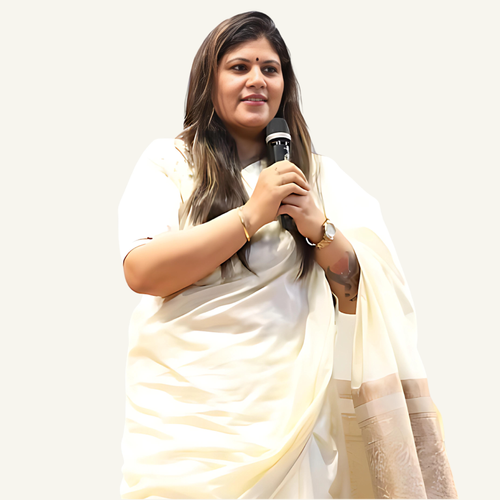 Dr. Rashhi Sharma, PhD
Founder and Lead Trainer of The School of Mediumship. She studied mediumship with Suzanne Giesemann in the United States and in person at Arthur Findlay College and The College of Psychic Studies in the United Kingdom. Full profile
 Prabhat Sharma
Trainer at The School of Mediumship. He studied mediumship in person at Arthur Findlay College and The College of Psychic Studies in the United Kingdom, and co-teaches every day of Level 1. Full profile
Continue Exploring
- How to Choose a Mediumship CourseA practical international checklist for evaluating teachers, structure, evidence, ethics and support.Read the article →
- Evidential Mediumship ExplainedEvidence, the spirit communicator, sitter recognition and the practice itself.Read the guide →
- Evidential Mediumship Level 1Faculty, curriculum, admission, duration and current fees for the Bengaluru programme.Explore Level 1 →
References and official resources
- Arthur Findlay College. Our Courses: course types and beginner, intermediate, advanced and mixed-level learning.
- Government of Karnataka. The Karnataka Prevention and Eradication of Inhuman Evil Practices and Black Magic Act, 2017 (Act 46 of 2017). Text of the Act; in force from 4 January 2020: Onmanorama report.
- Government of Maharashtra. Maharashtra Prevention and Eradication of Human Sacrifice and other Inhuman, Evil and Aghori Practices and Black Magic Act, 2013. India Code.
- MAP Academy. Bhuta Kola: ritual performance tradition of Tulu Nadu, coastal Karnataka.
- EBSCO Research Starters. Theosophical Society Founded: New York, 1875; centre at Adyar, 1882.
- The School of Mediumship. Evidential Mediumship Level 1: programme information, fees and terms.
- Government of India. Official e-Visa portal: categories and conditions, including for short courses.
- UK Government. Visit the UK as a Standard Visitor.