If you are considering learning mediumship, one of the first decisions you may face is whether to join an online course or attend residential training. Understanding mediumship, practising mediumship and developing consistency in mediumship are related, but they are not the same learning task.
Both approaches have a place in mediumship education. Online learning has made experienced teachers and established institutions accessible to students around the world. Residential programmes offer a different kind of experience, where teaching, practice, observation and feedback take place together over several consecutive days.
The question is not simply which format is better. It is what you want to learn, how much practical experience a course provides, and whether its environment supports your stage of development. At The School of Mediumship, we have chosen residential teaching for our training in the practice of mediumship. This article explains that decision honestly, while recognising the genuine value of other approaches.
1. What Can You Learn Through an Online Mediumship Course?
Online mediumship education can be a valuable starting point, particularly for people who are curious about the subject or wish to study with teachers outside their own country. A well-designed course may introduce the foundations: history, Spiritualist philosophy, ethical responsibilities and the different ways mediums describe receiving information.
Live online classes can also offer discussion, meditation, guided exercises and practice with other students. Established colleges now run interactive online courses, some at intermediate and advanced level, with cameras on, small groups and live tutor feedback1,2. In smaller interactive groups, teachers can observe aspects of a student's work, listen to how information is communicated, and offer feedback.
Online learning is particularly useful for:
- Understanding the foundations: terminology, principles, and the differences between psychic awareness, mental mediumship and evidential communication.
- Learning from international teachers without the cost and time of travel.
- Exploring a specific subject in depth, such as sitting in the power, symbolism, the clairs, evidential standards or sitter ethics.
- Continuing development through regular discussion, circles or guided practice between periods of more intensive training.
- Learning within real constraints, when travel, disability, family responsibilities or finances make residential attendance difficult.
One distinction matters a great deal: a recorded course is not the same as a live interactive class. A recording can explain a subject, but it cannot respond to an individual's questions or observe their progress. A recorded introduction, a two-hour workshop and a twelve-week interactive programme are very different learning experiences, so “online” should never be treated as one category.
2. Where Does Online Learning Have Limitations?
Mediumship development involves more than understanding what an impression might mean. In evidential mediumship, the student works towards communicating specific information attributed to a spirit communicator, so that a sitter can recognise the person being described. The student must learn to separate the original impression from its interpretation, build a coherent description, listen to feedback and recognise when information has not been understood or recognised.
These processes need practice, observation and thoughtful correction. A live online teacher can support many of them. Some aspects of in-person learning, however, are harder to reproduce remotely.
None of this means meaningful development cannot happen online. It means that the opportunities for observation, repetition, individual guidance and care depend heavily on how an online programme is structured. And a short course, online or in person, should not be expected to provide the depth of supervised practice of a carefully designed extended programme.
3. What Makes Residential Mediumship Training Different?
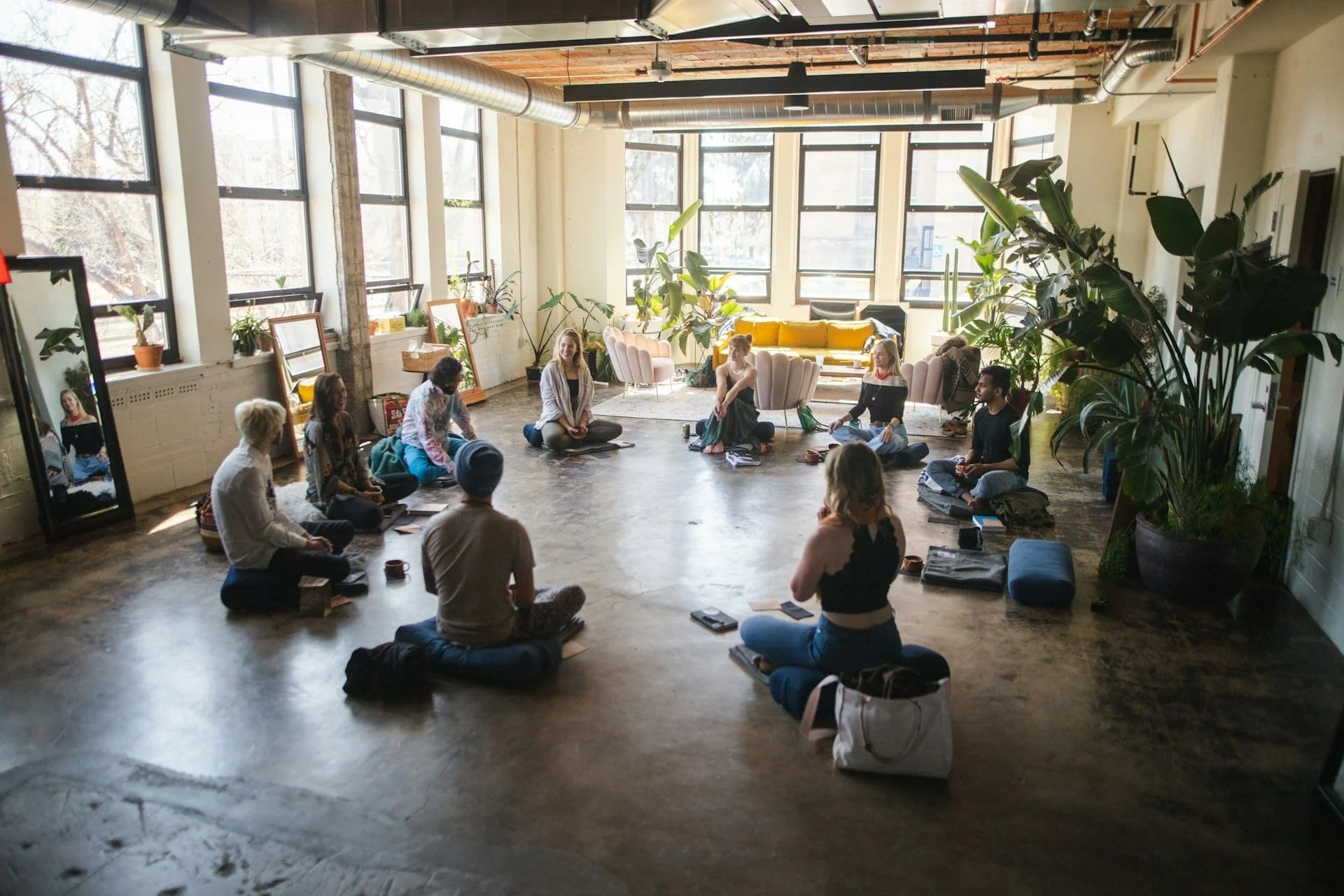
Residential training places students and teachers in a shared learning environment for several consecutive days. The value is not simply that everyone is physically present. It comes from what the programme makes possible with that time.
Students move between instruction, demonstration, practical exercises, private sittings, group work and reflection without losing continuity. A student who struggles with an exercise in the morning can revisit it later that day, work with a different partner and receive further guidance. Teachers come to understand patterns in each student's development, rather than seeing a single, isolated attempt.
Learning through sustained practice
Evidential mediumship asks a student to do several things at once: remain attentive to the communicator they believe they are perceiving, convey information accurately, avoid adding assumptions, and respect the sitter's responses. Understanding these responsibilities intellectually is different from managing them during an actual sitting. A residential setting lets students return to these skills again and again until they begin to work together.
The importance of individual feedback
One student may describe impressions readily but struggle to develop detail. Another may receive specific information yet lose confidence when the sitter does not recognise something. A third may be so concerned about being right that they interrupt their own communication. These students need different guidance, and when teachers can observe their work across several days, feedback can become specific to each person and to the stage they have reached.
Learning from the whole group
Much is learned by watching others: a fellow student conducting a sitting, a teacher handling an unrecognised detail, or a discussion of why an apparently convincing statement was too general. Not every useful lesson comes from being the person giving the sitting.
Residential learning also leaves room for informal conversation and reflection. Questions often surface hours after an exercise, once a student has had time to consider what happened. A good programme makes space for them, without turning every moment into another exercise.
4. What Residential Training Cannot Promise
Residential training asks for a greater commitment of time, travel and money, and for some people that makes it impractical. A shared environment can also feel demanding: working with unfamiliar people, receiving feedback in front of others, and trying exercises outside one's comfort zone. A responsible residential school therefore needs appropriate breaks, consent-based participation, clear boundaries, and an atmosphere in which students can acknowledge uncertainty without embarrassment.
Most importantly, residential attendance does not guarantee mediumistic ability or professional readiness. A week of intensive training can help a student understand their approach more clearly and gain substantial practical experience. It does not replace continued development. Nor does the physical presence of a teacher, by itself, make a programme educationally sound. The quality of teaching, the amount of genuine practice, the attention given to ethics and the honesty of feedback remain essential.
5. What Learning Research Suggests
There is no research comparing online and residential mediumship training directly. Wider research on learning, however, offers three useful points.
Online learning can teach knowledge well. A large review for the US Department of Education found that, on average, students in online conditions performed slightly better than those in face-to-face instruction, and that blended approaches showed the greatest advantage. The authors cautioned that the online conditions often involved more learning time and different materials, so the format itself was not shown to cause the difference3.
Skills grow through deliberate practice with feedback. Research on how people develop expert performance emphasises practice designed to improve specific aspects of a skill, with timely feedback and repetition, rather than simple exposure or time spent4.
Spaced practice helps learning last. A large synthesis of studies found that practice spread out over time generally leads to better long-term retention than the same amount of practice concentrated in one block5.
Taken together, these suggest something more useful than “online versus residential”. Knowledge and theory can be learned well online. Practical skill depends on supervised, repeated practice with specific feedback, which an intensive residential programme is well placed to provide. And lasting development benefits from continued, spaced practice afterwards, which online meetings and peer practice support well. The strongest pathway often combines them.
6. Online vs Residential Mediumship Training: Side by Side
| Consideration | Online training | Residential training |
|---|---|---|
| Access to teachers | International access without travelling | Direct access during teaching and shared activities |
| Theory and philosophy | Well suited to lectures, discussion and study | Taught alongside immediate practical application |
| Practical exercises | Possible through live interactive sessions and partner work | Sustained practice with different partners in a shared setting |
| Teacher observation | Depends on class size, cameras and structure | Teachers observe the whole in-room interaction |
| Feedback | Can be individual and constructive in a well-run course | Can be given repeatedly across consecutive sessions |
| Student care | Limited once the session ends | Teachers present to notice, ground and follow up |
| Time and continuity | Flexible; spread over weeks or months | Concentrated over consecutive days |
| Cost and access | Usually no travel or accommodation costs | Travel, residential costs and time away |
| Continuing development | Well suited to regular meetings and ongoing learning | An intensive foundation that still needs further practice |
Neither format is automatically better in every respect. A highly interactive online programme with skilled teachers, careful observation and ongoing feedback may offer more than a residential event made up mostly of lectures. Equally, an intensive residential programme with a small group and sustained individual guidance offers opportunities a brief online workshop cannot match.
The format matters, but the teaching structure matters more.
7. Is a Mediumship Retreat the Same as Residential Training?
The word retreat is used broadly. It may describe a programme centred on meditation, spiritual exploration, personal reflection or developing awareness. These can be meaningful experiences, but they are not necessarily structured mediumship education.
If your aim is to study evidential mediumship, look past the word and examine what is actually taught. Does the programme explain the difference between psychic and mediumistic awareness? Does it include supervised sittings? Will you learn to develop recognisable evidence, receive sitter feedback and practise responsible communication? A peaceful setting can support learning, but beautiful surroundings alone do not make a training programme. The difference lies in the curriculum, the teaching and the responsibilities students are prepared to take on.
8. Questions to Ask of Each Format
Our guide How to Choose a Mediumship Course sets out ten questions for any course: teachers, practice, evidence, ethics, certificates and cost. Alongside those, a few questions are specific to each format.
If you are considering online
- Is it live and interactive, or recorded?
- How many students per session, and are cameras on?
- Will the teacher observe my practice directly, or mainly in breakout rooms without them?
- Does practice work across my time zone?
- What support is there if an exercise leaves me unsettled after the call?
If you are considering residential
- How much of each day is supervised practice, not lectures?
- How many students and teachers will there be?
- Is staying at the venue required, and what is included?
- Are there breaks, and is participation consent-based?
- What continues after the residential days end?
These questions are more useful than testimonials, impressive titles or promises of rapid development.
9. Why The School of Mediumship Has Chosen Residential Teaching
Our decision to teach the practice of mediumship in person comes from how we believe foundational evidential practice should be developed: through direct experience, repeated exercises, careful observation and care for each student, rather than leaving students to interpret every experience on their own.
- The programme: Evidential Mediumship Level 1 is a six-day, fully residential programme near Bengaluru, India, with no more than twelve students.
- Hours: 70 total learning hours, including teaching, discussion, supervised practice and required independent assignments.
- Practice: about 20 to 25 supervised practice sessions per student, working with fellow students and in front of the group.
- Teachers: Dr. Rashhi Sharma and Prabhat Sharma teach throughout, so each student's development can be followed and difficulties addressed as they arise.
- Practice of stillness: the residential days also support sitting in the power, a traditional development practice of stillness and spiritual awareness, alongside practical evidential work.
We have not chosen residential teaching because we believe a screen prevents spiritual awareness or communication. We have chosen it because of the learning environment, and the level of care, we want to provide. For us, foundational training needs time to observe, practise, receive feedback, rest, and return to the work with greater understanding.
Where online learning fits at our School
We also value online education for what it does well. The School plans short online knowledge sessions: live sessions, usually two to four hours, each exploring one specialised topic related to mediumship. They are designed to inform, so a beginner can build understanding before training and an experienced student can deepen their knowledge. They are not mediumship training, they do not teach or develop the practice of mediumship, and they do not replace residential training or lead to a Certificate of Completion. Topics and dates will be announced; none are open for booking yet.
After residential training, eligible graduates can continue through monthly online group sessions with Dr. Rashhi, mediumship peer practice and the wider Soul Consciousness Lab® alumni community, under the current training terms. This is where the research on spaced practice comes into its own: an intensive in-person foundation, followed by regular practice over time.
Residential training and continuing online learning serve different, complementary purposes. Each does best what the other cannot.
Frequently Asked Questions
Can beginners learn mediumship online?
Beginners can study the foundations of mediumship online, and some live online courses include introductory practical exercises. Suitability depends on the course's structure, teaching and level of supervision. The School of Mediumship has chosen a residential format for its own training in the practice of mediumship.
Is residential mediumship training better than online training?
Residential training can offer advantages in sustained practice, observation, continuity and student care. Online learning offers accessibility, flexibility and access to international teachers. Neither format guarantees better results; course design and teaching quality are central.
Can I learn mediumship from recorded videos or YouTube?
Recordings can explain ideas, history and terminology. They cannot observe your practice, answer your questions or give you feedback, which is how practical skill develops. Treat recorded content as background reading, not as training.
Is a mediumship retreat the same as mediumship training?
Not necessarily. A retreat may focus on meditation, reflection or awareness. Structured mediumship training includes supervised sittings, recognisable evidence, sitter feedback and ethics. Look at the curriculum, not the setting.
Can I become a professional medium through a short course?
No course format or certificate should be treated as automatic proof of professional competence. Responsible practice requires continued development, ethical understanding, experience, honest feedback and the ability to recognise one's limits.
Do I need previous experience to attend residential mediumship training?
Not necessarily. Some residential programmes are designed for complete beginners, while others require substantial experience. The School's Evidential Mediumship Level 1 welcomes adults who are new to the subject as well as those who have already explored mediumship or related practices.
Why does The School of Mediumship teach only in person?
The School believes foundational evidential practice develops best through sustained supervised sittings, close observation, immediate feedback and in-person care for each student. Its training in the practice of mediumship is therefore residential. Online knowledge sessions are planned for learning about specific topics, but they are not mediumship training.
Can online learning support me after residential training?
Yes. Online discussion, peer practice, development circles and continuing education help students revisit what they learned and keep practising regularly, which research on spaced practice suggests supports lasting learning. The quality of support depends on what each school offers.
Choosing the Environment That Supports Your Development
There is no single learning journey that suits everyone. Some people begin with books and online lectures; others join a circle, attend workshops, or enter a residential course when they are ready to study seriously. What matters is recognising the difference between being introduced to a subject and receiving sustained guidance in its practice.
At The School of Mediumship, we believe evidential mediumship deserves patient teaching, consistent practice and a serious commitment to ethical responsibility. That is why we have chosen a fully residential foundation, supported by opportunities for continuing development.
The aim is not simply to experience something during a course. It is to understand your experiences more clearly, learn from them responsibly, and build a foundation for the practice that follows.
About the authors
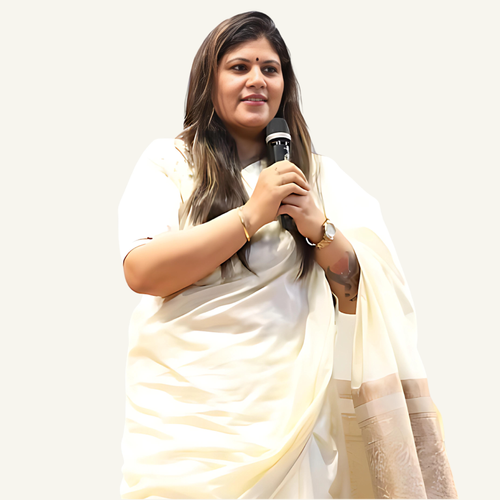 Dr. Rashhi Sharma, PhD
Founder and Lead Trainer of The School of Mediumship. She studied mediumship with Suzanne Giesemann in the United States and in person at Arthur Findlay College and The College of Psychic Studies in the United Kingdom. Full profile
 Prabhat Sharma
Trainer at The School of Mediumship. He studied mediumship in person at Arthur Findlay College and The College of Psychic Studies in the United Kingdom, and co-teaches every day of Level 1. Full profile
Continue Exploring
- How to Choose a Mediumship CourseTen practical questions for comparing teachers, practice, evidence, ethics, certificates and cost.Read the article →
- Mediumship Training in IndiaWhat Indian and international students should understand before choosing a programme.Read the article →
- Evidential Mediumship Level 1The School's six-day residential foundation near Bengaluru: curriculum, faculty, admission and fees.Explore Level 1 →
References
- Arthur Findlay College. Our Courses: residential and online course formats, and beginner to advanced levels.
- The College of Psychic Studies. Psychic & Mediumship Training: Intermediate/Advanced (Online): a live, interactive online course. Neither institution is affiliated with or endorses the School.
- Means, B., Toyama, Y., Murphy, R., Bakia, M. and Jones, K. (2010). Evaluation of Evidence-Based Practices in Online Learning: A Meta-Analysis and Review of Online Learning Studies. SRI International for the US Department of Education.
- Ericsson, K. A., Krampe, R. T. and Tesch-Römer, C. (1993). The role of deliberate practice in the acquisition of expert performance. Psychological Review, 100(3), 363–406. doi:10.1037/0033-295X.100.3.363
- Cepeda, N. J., Pashler, H., Vul, E., Wixted, J. T. and Rohrer, D. (2006). Distributed practice in verbal recall tasks: a review and quantitative synthesis. Psychological Bulletin, 132(3), 354–380. doi:10.1037/0033-2909.132.3.354
- The School of Mediumship. Evidential Mediumship Level 1: programme information, fees and training terms.